Human Neural Stem Cell Differentiation Medium, for sterile in vitro change of multipotent cells toward specialized lineages including astrocyte, neural and oligodendrocyte.
Human Neural Stem Cell Differentiation Media
Human Neural Stem Cell Differentiation Media are specialized formulations designed to guide human neural stem and progenitor cells (HNSC/NPC) through controlled, lineage-directed differentiation toward neural cell phenotypes in vitro.
Description
Specialized Media Differentiate Human Neural Stem Cells (HNSC) to 3 Lineages
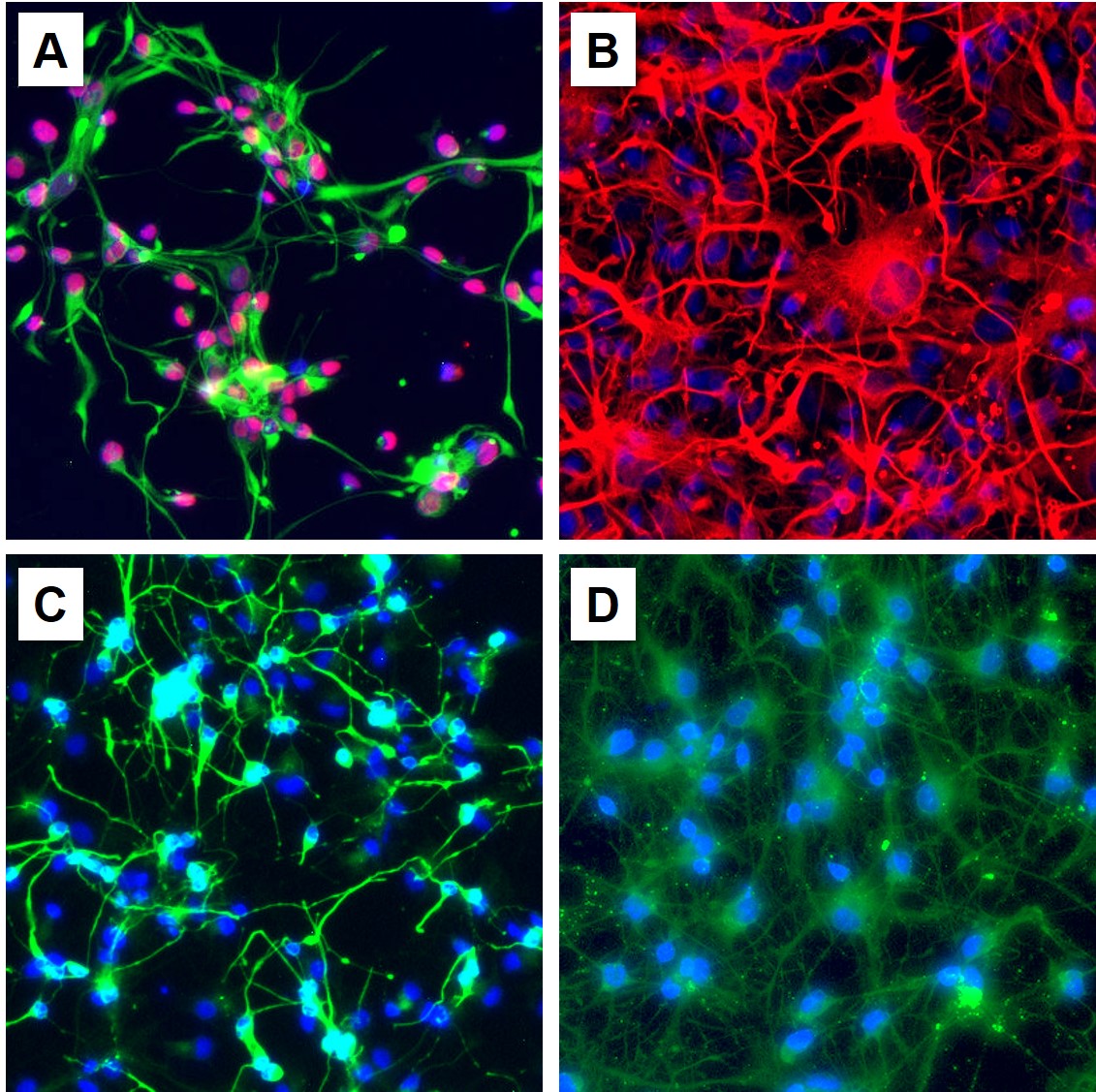
HNSC stain for Nestin (green) and Sox2 (red) (A). HNSC cultured in Medium 813D-100A differentiate to Astrocytes (GFAP, red) (B), those in 813D-100N differentiate to Neurons (Class III β-Tubulin, green) (C) and cells in Medium 813D-100O differentiate to Oligodendrocytes (O4, green) (D). All cells are counterstained with nuclear-specific DAPI (blue).

Human Neural Stem Cell Differentiation Media are specialized formulations designed to guide human neural stem and progenitor cells (HNSC/NPC) through controlled, lineage-directed differentiation toward neural cell phenotypes in vitro. Neural stem cell populations are multipotent cells capable of giving rise to major central nervous system (CNS) lineages — including neurons and glial populations such as astrocytes and oligodendrocyte-lineage cells — depending on the specific starting cell background, culture conditions, and differentiation protocol. In neurobiology research, managing this differentiation cascade is key to developing cell-based models for studying neurodevelopment, disease mechanisms, and therapeutic strategies.
In stem cell workflows, Human Neural Stem Cell Differentiation Media are typically applied downstream of neural induction and expansion stages. Intended for use with human induced pluripotent stem cell (HiPSC)-derived and human embryonic stem cell (HESC)-derived NPCs, as well as primary human neural progenitors, these media supply defined growth factors and neurotrophic cues that support cell survival and promote differentiation into neuronal and glial cell types. While PSC line background, passaging method, cell density, and matrix coating influence overall outcomes, standardized media formulations help improve consistency across experiments and culture workflows.
Differentiated cultures grown in these media are commonly characterized using lineage-associated surface and intracellular markers, such as β-III-tubulin (Tuj1) and MAP2 for neuronal lineages, GFAP for astrocyte-associated populations, and O4 for oligodendrocyte-lineage cells (with MBP as a marker of more mature oligodendrocyte phenotypes in appropriate protocols), alongside optional functional readouts such as calcium imaging or electrophysiology where protocol-driven maturation is achieved. These neural culture models are used in neurobiology research to model CNS disorders (including neurodegenerative and neurodevelopmental conditions), evaluate neuroinflammatory and synaptic signaling pathways, and perform molecular biology assessments of gene expression and cellular function.
Human Neural Stem Cell Differentiation Media provide a defined, human-focused culture foundation that helps researchers generate differentiated neural cell populations from neural progenitor starting points. By offering tailored nutritional and signaling support, these media support robust data generation across disease modeling, neurotoxicity testing, and translational research applications.
Each medium in this series is carefully optimized to differentiate Human Neural Stem Cells (HNSC) into a unique lineage: Astrocyte (813D-100A), Neuron (813D-100N) or Oligodendrocyte (813D-100O).
Details
CAI media are tested for sterility in order to confirm no bacteria, yeast or fungi contaminate the solutions. The products undergo further quality control for correct pH, osmolality and lack of endotoxins. A panel of different bioassays affirm the media sustain a proper environment for expected cell-type-specific culture, growth, plating, karyotype, physiology, morphology, viability, population doublings, surface markers, cryopreservation, differentiation and/or induction.
Laboratory research use only (RUO). Not for human, clinical, diagnostic or veterinary use.
 Powered by Bioz