Organoids
Induced Human Alveolar Epithelial Cell organoids offer several critical advantages.
A primary advantage is the ability to maintain a stable, functional human phenotype for long periods, which can be difficult with traditional cell sources. Primary AEC2s harvested directly from donor lungs are fragile in culture: they lose their surfactant-producing characteristics and stop dividing within days.
i-HAEpC2 Organoids are iPSC-derived with the unique DISCUS 3D system.
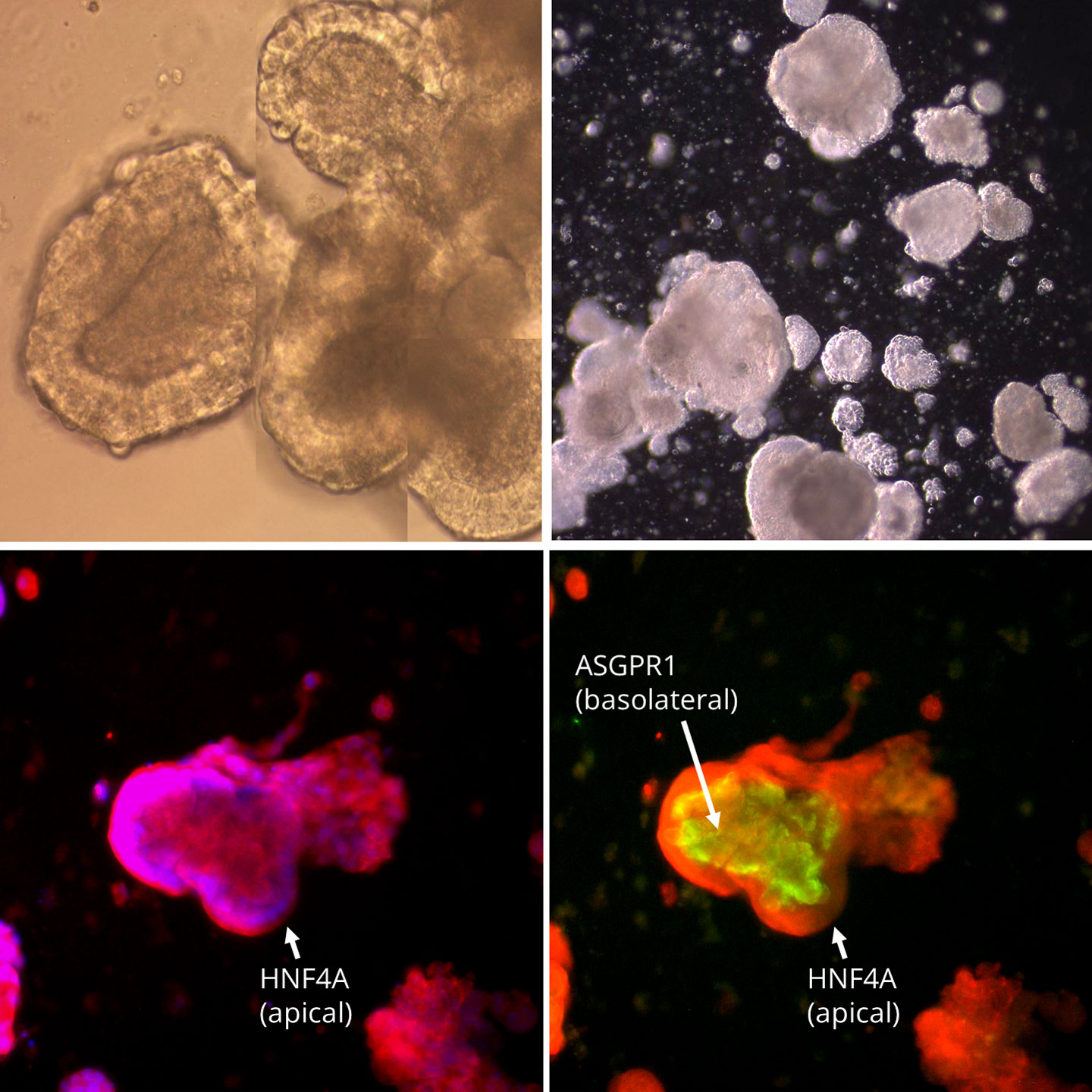
iPSC-derived human hepatocyte organoids (i-HH) also overcome the fragility of tradtional hepatocyte models and provide a genetically stable and metabolically mature human liver model. This allows for “chronic” toxicity testing. In an organoid format, i-HH organoids express adult liver markers and can mimic a healthy adult liver.
Liver function depends on the physical structure of the tissue. i-HH organoids naturally self-organize into 3D structures that develop bile canaliculi and display apical-basolateral polarity.
iPSC-derived cells can be created from any individual. This allows generation from a patient with a specific genetic condition, rather than being limited to whatever donor tissue happens to be available.
On April 10, 2025, the FDA announced a Roadmap to Reducing Animal Testing in Preclinical Safety Studies to reduce and phase out animal testing and promote alternatives such as advanced computer simulations and lab grown human organoids and organ-on-a-chip systems.
On April 29, 2025, the US NIH announced a new initiative to prioritize human-based research technologies and reduce use of animals in NIH-funded research. On July 8, 2025 at a collaborative FDA & NIH Workshop on Reducing Animal Testing, the NIH announced that NIH will no longer seek proposals exclusively for animal models and that all new NIH funding opportunities moving forward should incorporate language on consideration of new approach methodologies (NAMs), including organoids and organ-on-a-chip.
