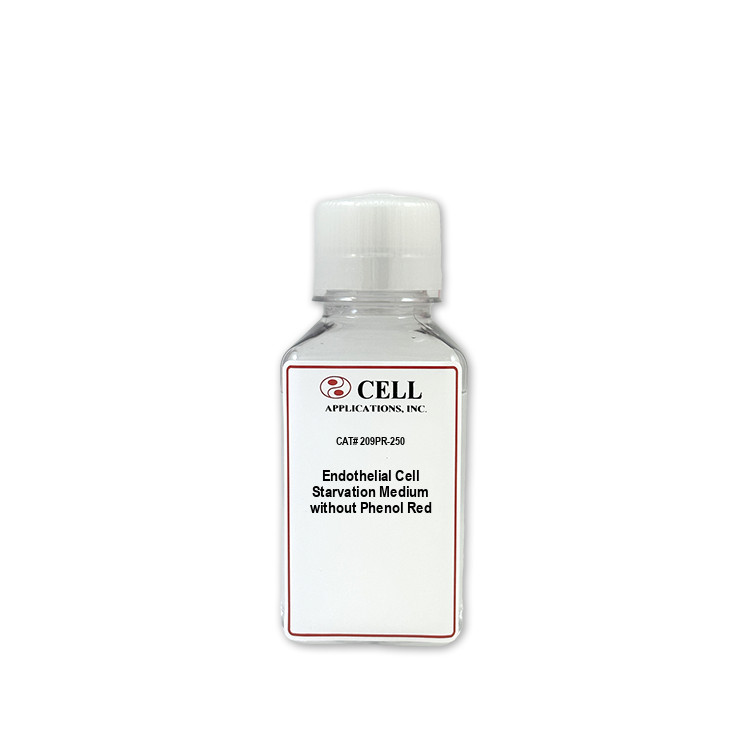
Custom Media without Phenol Red
Custom media without phenol red are tailored cell culture formulations designed to reduce background optical interference and minimize estrogen-receptor–related background attributable to the pH indicator dye phenol red.
Description
Custom media without phenol red are tailored cell culture formulations designed to reduce background optical interference and minimize estrogen-receptor–related background attributable to the pH indicator dye phenol red. While phenol red is standard in many basal media (such as DMEM, MEM, and RPMI 1640) for visual pH monitoring, its presence can be problematic in sensitive downstream assays where background absorbance/fluorescence and unwanted receptor signaling can confound experimental readouts.
Phenol red has been reported to exhibit weak estrogenic activity that may affect estrogen-receptor–positive cells and alter gene expression in hormone-sensitive models. In addition, phenol red’s color can contribute to background absorbance and, depending on the assay and instrument settings, may increase background signal in optical measurements. Formulating media without phenol red can therefore help improve assay signal-to-noise and measurement accuracy in studies such as cell viability and proliferation assays, oxidative stress assays, fluorophore-tagged reporter assays, and other spectrophotometric endpoints — particularly when detection wavelengths overlap with phenol red signal.
These custom formulations maintain the foundational nutrient backbone of standard basal media, providing essential inorganic salts, amino acids, and energy sources while allowing researchers to tune specific components. Custom options typically include tailored concentrations of L-glutamine (or stable dipeptides) to support nucleotide synthesis and energy metabolism, non-essential amino acids (NEAAs), and sodium pyruvate. Bicarbonate buffering is preserved to help maintain physiological pH in standard CO₂ incubators.
Custom media without phenol red provide a researcher-defined culture platform that reduces potential optical background and minimizes phenol red–associated estrogenic effects while preserving essential nutritional support. This can improve sensitivity and reproducibility across hormone signaling studies, metabolic profiling experiments, and high-throughput screening workflows.
Client Testimonial
According to Sara Lynn Farwell, Ph.D. Candidate, Cell & Molecular Bio. at Lehigh University: “CAI’s Endothelial Cell Growth Medium is reliable for our experiments, as well as general culturing. There must be magic in their media, because when we had problems with other formulations, the CAI product fixed the issues!”
Head-to-Head Comparison Peer-Reviewed Article and Video
A recent peer-reviewed article published in Histochemistry and Cell Biology performed a head-to-head comparison of 7 leading cell culture media brands. Based on their results, the authors concluded the following in the publication’s Discussion:
“Fastest colony outgrowth and most colonies occurred in Cell Applications medium.”
See the video below:
 Powered by Bioz