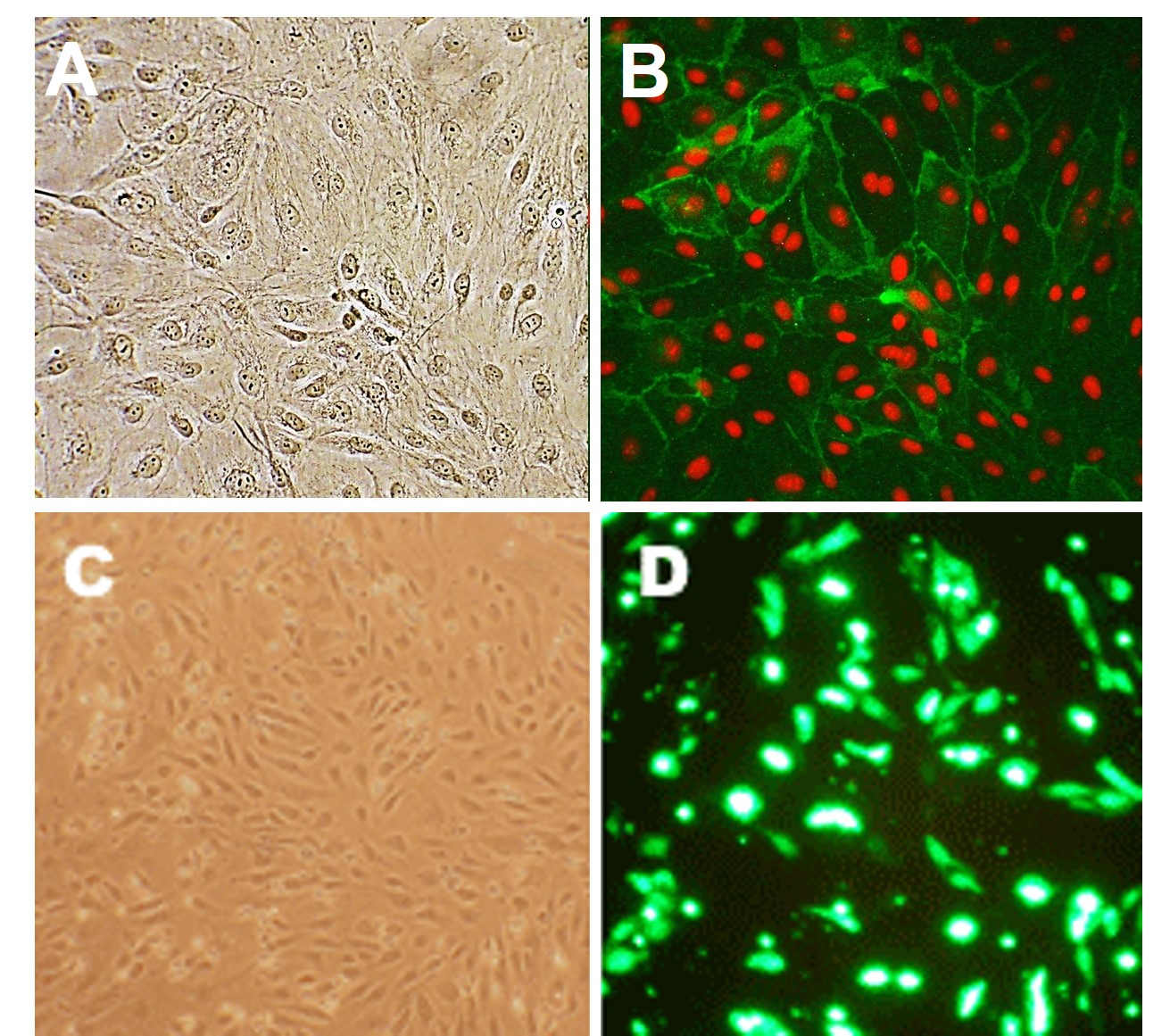
Human Lung Microvascular Endothelial Cells (HLMVEC) in culture (A). HLMVEC immunolabeled for CD31/PECAM (green); nuclei are visualized with PI (red) (B). HLMVEC transfected with GFP plasmid DNA using the Cytofect™ Endothelial Cell Transfection Kit (C,D)
Human Lung Microvascular Endothelial Cells: Type 2 Diabetes: HLMVEC-T2D
Human Lung Microvascular Endothelial Cells (HLMVEC-T2D) are highly specialized primary cells isolated from the dense alveolar microvasculature of the human lung from donors with Type 2 Diabetes.
Description
Human Lung Microvascular Endothelial Cells from donors with Type 2 Diabetes (HLMVEC-T2D) provide a scientifically relevant in vitro model to study how diabetes-associated changes in glucose handling and endothelial function shape the pulmonary microvasculature response. The pulmonary circulation is composed of metabolically active, functionally responsive cells that interact with circulating substrates, including oxygen delivery, and contribute to vascular regulation across capillary blood interfaces in the blood circulation. Because endothelial cells govern key processes at the blood–vessel interface, HLMVEC-T2D are useful for examining diabetes-linked effects on inflammation, circulatory homeostasis, and vascular dysfunction in settings that are relevant to both microvascular and broader atherosclerosis-associated pathology.
In the context of T2DM (type 2 diabetes mellitus), these endothelial response studies can be framed around diabetes-relevant exposures such as diabetes, glucose, blood sugar level, and glycemic burden markers like A1C, while comparing specificity against type 1 models that reflect different underlying biology. Endothelial dysfunction in diabetes is tightly connected to vascular tone regulation and to signaling pathways that influence how the endothelium interfaces with blood components, including red blood cell–related hemodynamic and oxygenation consequences as well as blood flow through artery and vein microenvironments. By capturing donor-derived disease phenotypes that reflect insulin-associated insulin resistance and impaired insulin signaling, HLMVEC-T2D support mechanistic investigation of how diabetes and glucose-related stress promote endothelial inflammation and influence features associated with atherosclerosis and vascular remodeling.
HLMVEC-T2D are also well suited for evaluating functional outcomes relevant to disease progression and therapeutic response. For example, they can help researchers assess how pro-inflammatory stimuli and diabetes-associated conditions alter endothelial activation states and downstream signaling programs, including pathways relevant to endothelial permeability, leukocyte interaction, and vascular reactivity. In addition, because diabetes involves systemic metabolic dysregulation that originates in insulin-producing tissues such as the pancreas, these models provide a practical way to connect pancreas–driven insulin and diabetes biology to pulmonary microvascular endothelial behavior in capillary blood circulation.
Pre-screened variants such as select lots (S-HLMVEC) can further improve experimental consistency by using defined endothelial stimulation and readouts of activation-related signaling (e.g., VEGF-stimulated VEGFR2 pathway response), supporting reproducible assessment of how diabetes phenotypes influence endothelial activation and inflammatory response.
Human Lung Microvascular Endothelial Cells (HLMVEC) provide a useful tool for studying various aspects of pathology and biology of the pulmonary microvasculature in vitro. The pulmonary vasculature is of great physiological/pathological significance. It is now recognized to be a tissue composed of metabolically active, functionally responsive cells, that interact with circulating substrates and regulate the composition of systemic arterial blood, affect target organ functions, and contribute to thrombosis, hemostasis and immune reactions, as well as tumor metastasis.
HLMVEC from Cell Applications, Inc. have been used to elucidate the therapeutic effects of Angiotensin I-converting enzyme (ACE) inhibitors, and the results revealed that they provide an additional benefit to patients by activating bradykinin B1 receptor leading to prolonged nitric oxide (NO) production in endothelial cells and inhibition of PKCϵ.
Pre-Screened Human Lung Microvascular Endothelial Cells (S-HLMVEC) are select lots of HLMVEC that have been undergone further characterization. Pre-Screened HLMVEC have been stimulated by VEGF, and assayed for activation of VEGFR2 signaling pathway. More information about pre-screened endothelial cells can be found on the Pre-Screened Endothelial Cell Product Page.
Type 2 Diabetes (T2D) Cellular Disease Models For T2D research and drug discovery, Cell Applications offers multiple cell types, isolated from donors where genetics and lifestyle factors contributed to insulin resistance and high blood sugar levels.
Details
| Tissue | Human lung (Type 2 Diabetes (T2D)) | |
|---|---|---|
| QC | No bacteria, yeast, fungi, mycoplasma, virus | |
| Character | Factor VIII-related Ab, CD31 (PECAM-1), DiI-Ac-LDL uptake. S-HLMVEC are select HLMVEC lots that have been tested positive for VEGFR2 pathway activation following stimulation by VEGF. | |
| Bioassay | Attach, spread on AFS-coated surface, proliferate in Growth Med | |
| Cryovial | 500,000 HLMVEC (3rd passage) frozen in Basal Medium w/ 10% FBS, 10% DMSO | |
| Kit | Cryovial HLMVEC (540T2D-05), Gr Med (111-500), Attchmnt Fctr Soln (123-100), Sbcltr Rgnt Kit (090K) | |
| Proliferating | Shipped in Tsfr Med, 4th psg (flasks or plates) | |
| Doublings | At least 15 | |
| Applications | Laboratory research use only (RUO). Not for human, clinical, diagnostic or veterinary use. |
Resources
FAQs
Need More Help?
Visit our comprehensive FAQ page for detailed answers to common questions.
Need More Help?
Visit our comprehensive FAQ page for detailed answers to common questions.
Primary Cell FAQs