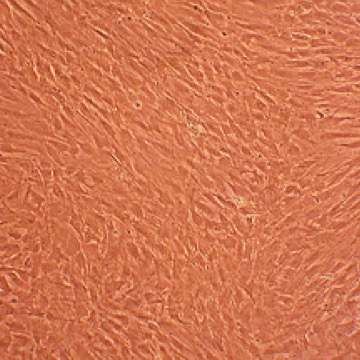
Rat Mesenchymal Stem Cells: RMSC
Rat Mesenchymal Stem Cells (RMSC) are a versatile population of adult stem cells isolated from rat bone marrow.
Description
- Migration and Homing: Signaling molecules play a critical role in recruitment; for example, TGF-β (a transforming growth factor-beta) stimulates vascular smooth muscle cells to produce MCP-1, which effectively attracts marrow stromal cells to sites of injury. Similarly, pharmacological agents like VPA and lithium have been shown to modulate HDAC-CXCR4 and GSK-3β-MMP-9 pathways to enhance cell migration.
- Environmental Cues: The biological characterization of these cells confirms that substrate physical topography and surface adhesion properties are key regulators of cell fate. By using a biomimetic scaffold or modifying surface materials, researchers can control cell adhesion and steer the differentiation of RMSC toward appropriate tissue constructs.
- Expansion Protocols: To ensure consistency in experiments, high-quality mesenchymal stem cell medium is required to maintain multipotency. While traditional protocols often rely on serum, modern research materials prioritize defined conditions to minimize variability during cell expansion.
Rat Mesenchymal Stem Cells (RMSC) have the potential to maintain multipotency and proliferate extensively in vitro. Bone marrow is the major blood creating organ, but in addition to supporting hematopoietic growth and differentiation, marrow stromal cells can be induced to produce cells of other connective tissues, such as bone, cartilage, and fat, as well as cells from neuroectodermal (neurons) and endodermal (hepatocytes) lineages.
RMSC from Cell Applications, Inc. have been used to demonstrate:
- TGF-β stimulates production of MCP-1 by vascular smooth muscle cells, which attracts bone marrow stromal cells
- Cell migration can be stimulated by VPA and lithium through HDAC-CXCR4 and GSK-3β-MMP-9, respectively
- Therapeutic potential of marrow stromal stem cells depending on the extracellular matrix properties
- Combination of low-level laser therapy and transplantation of marrow stromal stem cells results in greater functional recovery after nerve crush injury
- Direct stem cell differentiation by altering physical topography of the substrate
- Surface materials to control cell-adhesion properties
Details
| Tissue: | Normal healthy rat bone marrow | |
|---|---|---|
| QC | No bacteria, yeast, fungi, mycoplasma | |
| Character | Accumulate lipid in Differentiation Med | |
| Bioassay | Attach, spread proliferate in Growth Med | |
| Cryovial | 500,000 RMSC (2nd passage) in RMSC Basal Medium w/ 10% FBS, 10% DMSO | |
| Kit | Cryovial frozen RMSC (R492-05a), Growth Medium (R419-500), Subcltr Rgnt Kit (090K) | |
| Proliferating | Shipped in Gr Med, 2nd psg (flasks or plates) | |
| Doublings | At least 10 | |
| Applications | Laboratory research use only (RUO). Not for human, clinical, diagnostic or veterinary use. |
Resources
FAQs
Need More Help?
Visit our comprehensive FAQ page for detailed answers to common questions.
Need More Help?
Visit our comprehensive FAQ page for detailed answers to common questions.
Primary Cell FAQs Powered by Bioz