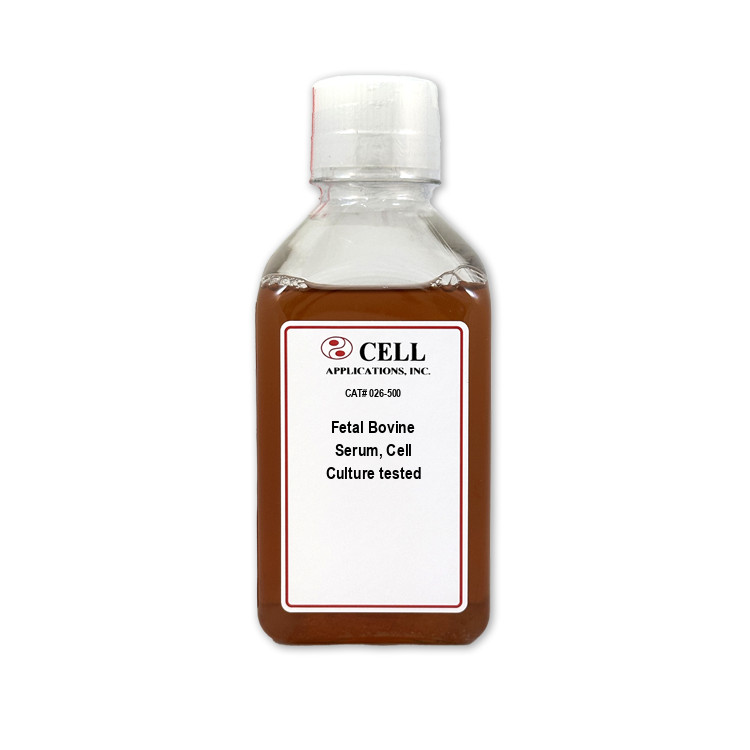
Fetal Bovine Serum (FBS) is a widely used cell culture medium supplement, containing numerous growth factors.
FBS: Fetal Bovine Serum
FBS: Fetal Bovine Serum is a biological supplement used to enrich cell culture media for a broad range of mammalian cells.
Description
FBS: Fetal Bovine Serum is a biological supplement used to enrich cell culture media for a broad range of mammalian cells. Also called fetal bovine serum or fetal calf serum, FBS is derived from blood collected from a bovine fetus during regulated processing of pregnant cattle. After collection, the serum is processed, filtered, and tested for quality attributes relevant to research and biomanufacturing.
FBS is not a complete medium by itself. Instead, bovine serum is typically added to a basal medium to provide a complex mixture of protein, lipids, amino acids, vitamins, minerals, hormones, growth factors, attachment factors, and other bioactive components. These constituents help support cell attachment, survival, cell growth, metabolism, and proliferation in cultured cells.
FBS is used with many types of mammalian cells, including primary cells, established cell lines, stem cells, fibroblasts, epithelial cells, endothelial cells, immune cells, and other cells derived from human or animal tissues. In the body, these cell types occupy specialized locations and perform distinct functions: fibroblasts produce connective-tissue matrix, epithelial cells form protective and absorptive barriers, endothelial cells line blood vessels, immune cells coordinate defense responses, and stem cells contribute to tissue maintenance and repair. In culture, serum supplementation can help preserve viability and provide conditions that allow cells to expand for research.
The serum components that support cultured cells include bovine serum albumin, which can bind and transport lipids and other molecules; attachment factors that promote adhesion to treated culture surfaces; and soluble signals that influence cell-cycle activity, differentiation, and survival. FBS can therefore contribute to routine cell culture, cell expansion, cell proliferation, transfection workflows, assay development, and the maintenance of sensitive cell populations. It may also be used in selected 3D cell culture systems, organoid workflows, and other models in which serum-dependent signaling is appropriate.
Different applications require different serum specifications. FBS products may differ in filtration, testing, origin documentation, treatment, and performance characteristics. Custom options may include gamma irradiated serum for applications requiring additional control of viable microbial contamination, as well as heat inactivated FBS for protocols in which complement activity is a relevant experimental variable. Heat inactivation can also alter other serum components, so it should be used only when justified by the application or established protocol.
Important quality attributes include endotoxin levels, hemoglobin, mycoplasma status, sterility, viral testing, origin traceability, and lot-to-lot performance. Endotoxin is a bacterial component that can activate inflammatory pathways and interfere with assays, particularly those involving immune cells, primary cells, or sensitive cell lines. Selecting a well-characterized batch and qualifying that batch with the intended cells can help reduce experimental variation and identify lower levels of unwanted background activity.
FBS is commonly used in research involving mammalian cells, recombinant protein production, antibody generation, immunoassays, toxicology, drug discovery, and vaccine production. It may also be used during the expansion of cells intended for tissue-engineering and regenerative-medicine studies. However, serum contains undefined and variable biological components, and it may influence cell phenotype, gene expression, differentiation, and assay results. For applications requiring greater compositional control, researchers may use serum-free media, defined supplements, or other serum free media alternatives.
The collection and manufacture of animal serum are subject to considerations involving traceability, animal health, biosafety, geographic origin, and responsible sourcing. Manufacturers may use recognized industry guidance, including standards associated with the International Serum Industry Association, to support documentation and quality-management practices. Because FBS is an animal serum product, it should be selected with consideration of the intended application, regulatory requirements, contamination controls, and the need for reproducible performance.
FBS: Fetal Bovine Serum is intended for research use only. It is not intended for direct human or veterinary administration, and it should not be confused with serum prepared from adult cattle or calf serum. Proper storage, aseptic handling, and application-specific lot qualification are recommended to help maintain the performance of this high quality FBS supplement.
FBS, the liquid fraction remaining after blood coagulation, minus red blood cells, fibrin and clotting factors, is a widely used serum-supplement for in vitro cell culture applications of human and animal cells. It provides ample versatility, growth factors, metabolic requirements, defined and undefined components. Frozen storage preserves the stability of growth factors and other compounds, so repeated freeze/thaw cycles should be avoided. Rather, dispense the serum into smaller, single use aliquots prior to freezing.
 Powered by Bioz