Human iPSC-Derived Neural Stem Cells: i-HNSC
Human iPSC-Derived Neural Stem Cells (i-HNSC) are a highly homogeneous, self-renewing, and multipotent neural stem cell population derived from control human induced pluripotent stem cells (iPSCs).
Description
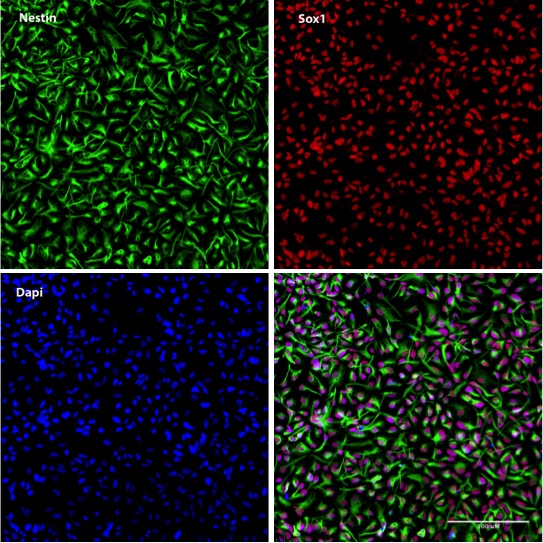
Human iPSC-Derived Neural Stem Cells (i-HNSC) — often researched as human neural stem cells or simply iPSC-derived NSCs — are a highly homogeneous, self-renewing, and multipotent neural stem cell population derived from control human induced pluripotent stem cells (iPSCs). Unlike a transformed or continuous cell line, i-HNSC represent a pre-differentiated, stable intermediate cell type that largely bypasses the ethical concerns associated with human embryonic stem cells while retaining a normal human karyotype. Characterization protocols verify that this neural stem population exhibits high purity, with greater than 90% of the cells actively expressing definitive progenitor and NSC markers such as Nestin and Sox1. These primitive multipotent neural progenitor cells serve as a physiologically relevant tool, offering a consistent and scalable alternative to primary human fetal tissue or mouse-derived systems.
While i-HNSC themselves are generated in vitro through the directed neural induction of reprogramming-derived iPS cells, their natural counterparts in the human body reside within specialized neurogenic niches of the central nervous system. In the adult human brain, native neural stem and progenitor populations are restricted to specific regions such as the subventricular zone of the lateral ventricles and the subgranular zone of the dentate gyrus in the hippocampus. To generate i-HNSC in the laboratory, researchers reprogram an accessible donor somatic cell (such as dermal fibroblasts or peripheral blood mononuclear cells) into human pluripotent stem cells. These undifferentiated lines are then guided toward a neuroectodermal fate, often passing through an intermediate embryoid body stage or monolayer induction protocol to yield a highly pure, expandable population committed to the nervous system lineage.
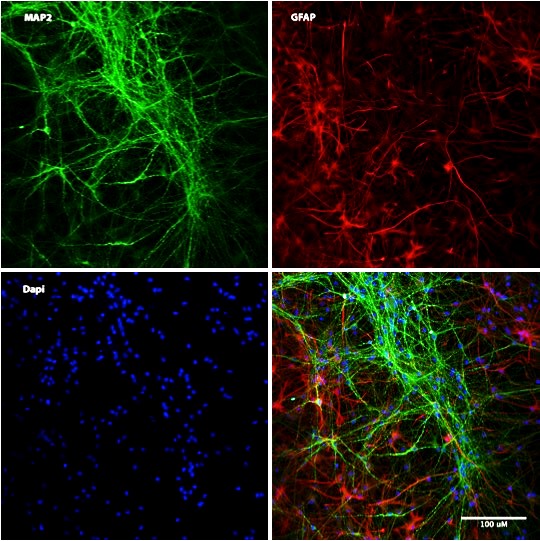
The primary biological function of a neural stem cell is to drive neurogenesis and gliogenesis during embryonic neurodevelopment and maintain localized tissue homeostasis. Under controlled environmental cues, i-HNSC possess the intrinsic programming to undergo stereotyped neuronal differentiations, consistently giving rise to all three major differentiated cell types of the central nervous system: functional neurons, astrocytes, and oligodendrocytes. When cultured in specialized differentiation media, i-HNSCs naturally generate a balanced, self-assembling population of mature neurons and supportive glial cells. This coordinated cross-talk is crucial; when iPSC-derived neurons and astrocytes are co-cultured together, the glia secrete extracellular signals that enhance phenotypic maturation, foster typical neuronal morphology, support synaptogenesis, and drastically improve long-term neuronal survival.
In laboratory settings, i-HNSC provide an invaluable human-derived platform for drug screening, neurotoxicity testing, and modeling complex neurodegenerative disease. By utilizing patient-specific iPSC lines, investigators can differentiate i-HNSC into specific disease-affected lineages—such as spinal cord motor neurons to study Amyotrophic Lateral Sclerosis (ALS), or cortical lineages to recapitulate Alzheimer’s disease pathology. Researchers leverage these cells in conventional 2D formats to record electrophysiological activity from functional neurons, or embed them into advanced 3D biomimetic matrices to generate complex cerebral organoids. These 3D mini-brains allow for the structural evaluation of human-specific brain development and drug penetrance. Supported by next-generation manufacturing techniques, vast quantities of these cells can be produced from a single donor lot in a short period, allowing pharmaceutical pipelines to run high-throughput cell-based discovery assays on uniform human cells that accurately mirror mature human neurophysiology.
- Tang X, Zhou L, Wagner AM, Marchetto MCN, Muotri AR, et al. Astroglial cells regulate the developmental timeline of human neurons differentiated from induced pluripotent stem cells. 2013. Stem Cell Res 11, 743–757.
- Odawara, A., Saitoh, Y., Alhebshi, A. H., Gotoh, M. & Suzuki, I. Long-term electrophysiological activity and pharmacological response of a human induced pluripotent stem cell-derived neuron and astrocyte co-culture. 2014. Biochem Biophys Res Commun 443, 1176–1181.
- Fukushima, K., Miura, Y., Sawada, K., Yamazaki, K. & Ito, M. Establishment of a Human Neuronal Network Assessment System by Using a Human Neuron/Astrocyte Co-Culture Derived from Fetal Neural Stem/Progenitor Cells 2016. J Biomol Screen 21, 54–64.
- Marchetto, M. C. N., Carromeu, C., Acab, A., Yu, D., Yeo, G., Yangling, M., Gage, F. H. & Muotri, A. R. A model for neural development and treatment of Rett syndrome using human induced pluripotent stem cells. Cell, 143(4): 527-39 (2010).
Details
| Source | Derived from Human iPSC of a single donor | |
|---|---|---|
| QC | No bacteria, yeast, fungi, mycoplasma, virus | |
| Cryovial | 1,000,000 i-HNSC (1st passage) in freezing medium | |
| Kit | Cryovial frozen i-HNSC (i820-10), Growth Medium Kit (i813K-250), i-HNSC Coating Solution (126-10), Rock Inhibitor, NSC Dissociation Solution (076-05), Non-Stick Solution (1025-05). | |
| Applications | Laboratory research use only (RUO). Not for human, clinical, diagnostic or veterinary use. | |
Resources
FAQs
Need More Help?
Visit our comprehensive FAQ page for detailed answers to common questions.
Need More Help?
Visit our comprehensive FAQ page for detailed answers to common questions.
Primary Cell FAQs Powered by Bioz