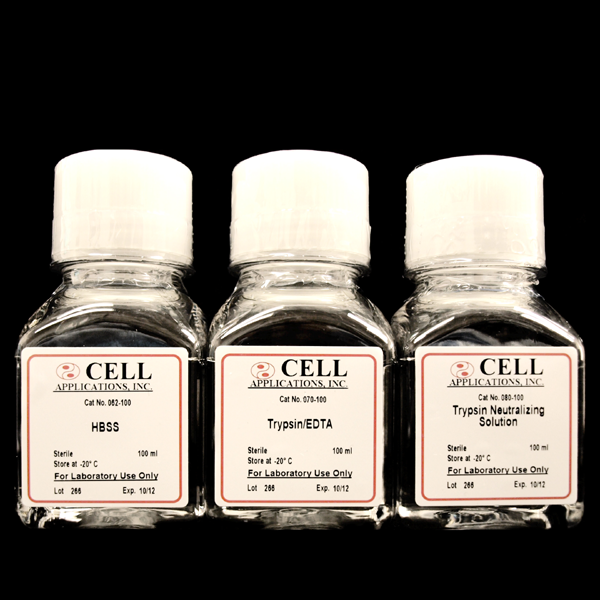
Cell Culture Reagents
Cell Culture Reagents encompass essential solutions and specialty chemicals that support many stages of the cell culture workflow, including primary-cell handling, cell attachment and expansion, three-dimensional matrix encapsulation, cryopreservation, and downstream biochemical analysis.
Description
Cell Culture Reagents encompass essential solutions and specialty chemicals that support many stages of the cell culture workflow, including primary-cell handling, cell attachment and expansion, three-dimensional matrix encapsulation, cryopreservation, and downstream biochemical analysis. Primary cells and stem-cell models can be sensitive to changes in osmolarity, pH, enzymatic exposure, temperature, and matrix composition. Appropriately selected, high-quality reagents can therefore help promote consistent handling and experimental reproducibility.
Core Reagents
- Phenol Red: A visual pH indicator commonly included in culture media. Its color changes from yellow under acidic conditions to red or pink near the typical physiological pH range and may become purple under more alkaline conditions. These color changes provide a general indication of pH shifts associated with factors such as cellular metabolism and CO₂ exchange; Phenol Red is not, by itself, a direct measurement of metabolic activity or gas exchange.
- Antibiotic Antimycotic Solution: Provides supplemental antimicrobial activity against certain bacterial, fungal, and yeast contaminants in appropriate cell culture systems. Antibiotics and antimycotics should complement, not replace, aseptic technique, appropriate culture practices, and routine monitoring for contamination.
- Sodium Hydroxide (NaOH): Used for controlled pH adjustment of custom media formulations, buffers, and other reagents during cell-free preparation steps. Because concentrated NaOH can rapidly increase pH and damage cells, it should be handled and diluted according to the applicable instructions.
Three-Dimensional Culture and Hydrogel Applications
- Sodium Alginate Solution: Provides a biocompatible polymeric hydrogel matrix for three-dimensional cell encapsulation. In cartilage research, alginate bead culture can provide a three-dimensional environment that helps maintain or recover aspects of the differentiated chondrocyte phenotype and may reduce the dedifferentiation associated with prolonged two-dimensional monolayer expansion. Outcomes depend on the cell source and the culture conditions.
- Depolymerization Solution: Used to help dissociate suitable ionic hydrogel matrices, such as alginate beads, so that encapsulated cells can be recovered for counting, replating, viability assessment, or downstream analysis. When compatible with the matrix and cells and used as directed, depolymerization can support recovery of viable cells while limiting unnecessary mechanical or enzymatic stress. Suitability for extracellular-matrix components or organoids depends on the specific formulation and application.
Cell Processing and Downstream Analysis
- Lysis Buffer: Used to disrupt cellular membranes and release intracellular components for downstream analyses such as Western blotting, ELISA, qPCR, and other biochemical assays. Compatibility with proteins, RNA, DNA, and specific analytical platforms depends on the buffer formulation and the intended assay.
- Subculture Reagents and Cryopreservation Media: Complement cell-washing solutions, detachment reagents, and cryoprotective agents to support passaging, cell counting, freezer storage, and post-thaw recovery. Cell viability and recovery depend on the cell type, passage history, culture conditions, and cryopreservation protocol.
Together, these Cell Culture Reagents support primary-cell and cell-line models used in tissue engineering, extracellular-matrix remodeling, metabolic regulation, drug discovery, inflammation research, and other applications. By supporting controlled cell handling, matrix-based culture, cryopreservation, and sample preparation, they help researchers maintain and analyze cell models across different stages of an experimental workflow.
Everything you need for subculturing, cell adherence, cell culturing and maintenance, and much more.
Optimized biological and chemical reagents are critical for conducting successful cell culture experiments, particularly with primary cells. Cell Applications, Inc. offers a complete line of reagents that have been rigorously tested and validated for use with primary cells. These include: extracellular attachment matrices, cell dissociation reagents, cell washing solutions, cell freezing media, and a convenient range of related products.
Whatever your primary cell application, you can rely on Cell Applications, Inc. for the highest levels of quality, consistency, and service.
Products are for research use only. They are not intended for human, animal, or diagnostic applications.
 Powered by Bioz