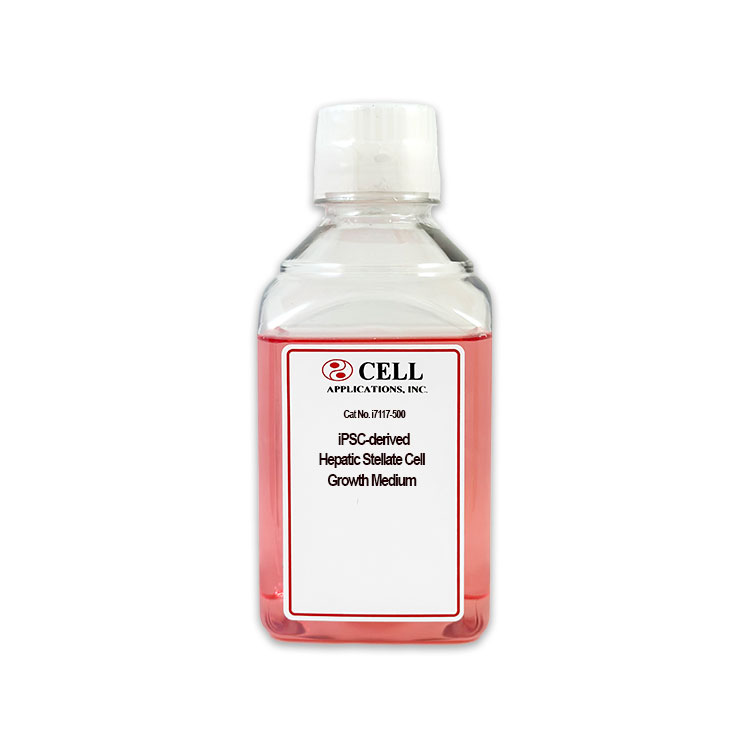
Human iPSC-Derived Hepatic Stellate Cell i-HHSC Medium
i-HHSC Growth Medium: All-in-one ready-to-use
Type: Growth Medium
Size: 500 ml
Price: $125.00
Description
Human iPSC-Derived Hepatic Stellate Cell (i-HHSC) Medium is an optimized growth formulation designed to support the attachment, expansion, and culture of human induced pluripotent stem cell-derived hepatic stellate cells (i-HHSCs) in vitro. i-HHSCs provide a renewable and scalable human cell source for studies of hepatic stellate-cell biology, while retaining characteristics that should be experimentally evaluated against primary human HSCs for each application.
Native hepatic stellate cells are perisinusoidal liver cells located in the space of Disse, between the sinusoidal endothelium and hepatocytes. In the quiescent state, they contain lipid droplets rich in retinoids, including retinyl esters, and contribute to hepatic homeostasis, extracellular-matrix maintenance, and signaling between liver cell populations.
In response to chronic liver injury, toxins, metabolic stress, or inflammatory signaling, quiescent hepatic stellate cells can become activated and acquire proliferative, contractile, and fibrogenic myofibroblast-like characteristics. Activated HSCs produce and remodel extracellular matrix, including collagen-rich scar tissue, and release cytokines, chemokines, growth factors, and other signaling molecules that influence inflammatory and tissue-repair responses. Persistent activation contributes to progressive liver fibrosis and cirrhosis and can promote a tumor-supportive microenvironment associated with increased hepatocellular carcinoma risk.
Human iPSC-Derived Hepatic Stellate Cell i-HHSC Medium supports the expansion and maintenance of i-HHSC cultures for phenotypic and functional assays. These cells can be used to investigate hepatic stellate-cell activation, extracellular-matrix remodeling, retinoid storage and loss, fibrogenic signaling, inflammatory crosstalk, and responses to candidate anti-fibrotic compounds. i-HHSCs can also be incorporated into multicellular liver models with hepatocytes, liver sinusoidal endothelial cells, and immune-cell populations, using culture conditions appropriate for each component.