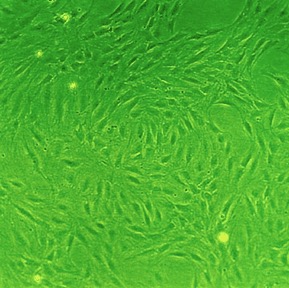
Rat Lung Fibroblasts: RLF
Rat Lung Fibroblasts (RLF) are primary mesenchymal cells isolated from the pulmonary interstitium of the rat.
Description
Rat Lung Fibroblasts (RLF) are primary mesenchymal cells isolated from the pulmonary interstitium of the rat. As essential structural components of the lung parenchyma, rat pulmonary fibroblasts play a critical role in maintaining extracellular matrix (ECM) homeostasis, regulating lung architecture, and mediating responses to pulmonary injury. Unlike immortalized primary cells or transformed stable cells, these rat primary cells provide a physiologically representative model for investigating the complex mechanisms of lung development, fibrosis, and inflammatory signaling. When utilized in cell culture, these cells require a specialized formulation such as Rat Fibroblast Growth Medium to maintain their phenotypic stability and proliferative capacity. RLF serve as a premier tool for dissecting the molecular pathways that govern pulmonary function and the transition between healthy and diseased states:
- Inflammatory Cascades: Studies utilizing RLF have provided foundational insights into neonatal lung injury, specifically demonstrating that exaggerated NF-κB activation in neonates — compared to adult models — is mediated through the specific phosphorylation of IκBα on Tyr42 in response to hyperoxia.
- Fibrotic Remodeling: In the context of idiopathic pulmonary fibrosis (IPF), RLF are frequently deployed to investigate the epithelial-mesenchymal transition (EMT). They serve as a vital control for distinguishing between residential fibroblasts and myofibroblasts derived from damaged epithelial cells, providing essential data on the signaling dynamics that drive tissue scarring.
- Therapeutic Pathways: Beyond basic cell biologics, these cells have been used to elucidate the protective effects and intracellular signaling cascades of agents like melatonin, offering potential pathways for attenuating oxidative stress and pulmonary remodeling.
The utility of RLF extends beyond pulmonary-specific research, as they are often utilized alongside other rat tissues and diverse animal models to validate cross-species biological responses:
- Comparative Research: Investigators frequently contrast the behavior of RLF with rat dermal fibroblasts, endothelial cells, and other rat cells to isolate tissue-specific signaling pathways. To ensure rigorous comparisons, researchers may leverage endothelial specific aadenoviral overexpression or integrate data from mouse tissues (such as C57BL6 mouse primary cells or diabetic mouse cells) to map conserved versus divergent responses to pulmonary stress.
- Broad Translational Scope: While RLF offer a robust rat-specific baseline, they are often used in conjunction with human primary cells — such as human cells, human diseased cells, or specialized lineages like fibroblasts — to benchmark human-relevant drug responses. This comparative approach ensures that findings from culture animal primary cells can be reliably extrapolated to broader translational contexts, differentiating these responses from those seen in rabbit cells, monkey cells, canine cells, porcine cells, or hamster cells.
Because of their responsiveness to environmental stimuli and metabolic modifiers, RLF are indispensable for high-resolution studies in molecular biology:
- Integrated Systems: Whether investigating stem cells, immune cells, bone marrow cells, or liver cells, the use of primary fibroblasts provides an essential stromal background. By maintaining a clean, primary lineage, investigators can avoid the artifacts often associated with diabetic cells or other altered lines, ensuring that findings regarding pulmonary homeostasis are based on authentic, healthy tissue kinetics.
- Customization: As projects evolve, researchers requiring more specialized isolates can pursue custom cell isolation strategies. This ensures that the baseline cellular model perfectly matches the experimental requirements, whether the goal is to map the nuances of lung fibrosis or to study the intersection of pulmonary signaling with systemic metabolic triggers.
Rat Lung Fibroblasts (RLF) from Cell Applications, Inc. have been used to demonstrate that exaggerated (compared to adults) NF-κB activation in neonates in response to hyperoxia is mediated by phosphorylation of IκBα on Tyr42. They were also used to elucidate melatonin effects and signaling pathway and served as a control in studies investigating epithelial-mesenchimal transition as the source of myofibroblasts responsible for idiopathic pulmonary fibrosis.
Details
| Tissue | Normal healthy Sprague Dawley rat lung | |
|---|---|---|
| QC | No bacteria, yeast, fungi, mycoplasma | |
| Character | Positive for fibroblast surface protein | |
| Bioassay | Attach, spread, proliferate in Growth Med | |
| Cryovial | 500,000 RLF (2nd passage) frozen in Basal Medium w/ 10% FBS, 10% DMSO | |
| Kit | Cryovial frozen RLF (R506-05a/-05n), Grwth Med (R116-500), Subcltr Rgnt Kit (090K) | |
| Proliferating | Shipped in Gr Med, 3rd psg (flasks or plates) | |
| Doublings | At least 10 | |
| Applications | Laboratory research use only (RUO). Not for human, clinical, diagnostic or veterinary use. |
Resources
FAQs
Need More Help?
Visit our comprehensive FAQ page for detailed answers to common questions.
Need More Help?
Visit our comprehensive FAQ page for detailed answers to common questions.
Primary Cell FAQs Powered by Bioz