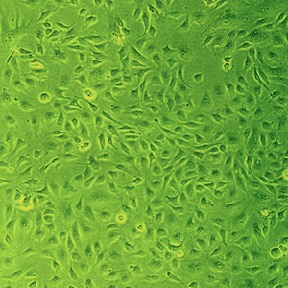
Bovine Renal Artery Endothelial Cells: BRAEC
Bovine Renal Artery Endothelial Cells: BRAEC
Bovine Renal Artery Endothelial Cells (BRAEC) are primary vascular endothelial cells lining the renal circulation.
Description
Bovine Renal Artery Endothelial Cells (BRAEC) are valuable primary cells for investigating kidney-relevant vascular biology, including mechanisms that link endothelial dysfunction to impaired renal microcirculation during disease. As vascular endothelial cells lining the renal circulation, the vascular endothelium of the kidney directly regulates endothelial function through nitric oxide–dependent vasomotor control, anti-inflammatory signaling, and barrier properties that influence vascular permeability. In this context, BRAEC provide a controlled animal-derived system in which kidney injury–associated processes can be interrogated at the level of endothelium, including how shear stress from blood flow and vasoactive mediators such as angiotensin II can reshape endothelial responses.
Endothelial dysfunction is implicated in renal pathologies characterized by reduced protective endothelial signaling and altered perfusion, including conditions seen after ischemic episodes and in renal failure patients. BRAEC support investigation of how these changes can translate into impaired renal microvascular integrity, affecting vasa recta–associated flow and promoting vascular leakage (vascular permeability) that can worsen kidney injury. Because endothelial cells coordinate responses to inflammatory and hemodynamic cues, BRAEC are particularly well suited to study how gene expression programs shift under diabetic-, ischemia-, or inflammation-like stimuli to alter vascular endothelial function.
Beyond barrier and signaling readouts, BRAEC can be used to examine key angiogenic and vascular homeostatic pathways, including vascular endothelial growth factor (VEGF)–linked regulation of endothelial activation and vascular endothelial growth programs. Such analyses help connect molecular changes (gene expression) with functional outcomes relevant to kidney injury, including endothelial adaptation to altered blood flow and the degree to which endothelial function is preserved or lost. In addition, BRAEC can be informative for exploring broader vascular endothelial themes that also appear in other microvascular beds, including how microvascular endothelial behavior differs across tissues. While brain microvascular endothelial cells and the blood brain barrier represent distinct vascular specializations, BRAEC can still provide comparative insight into common endothelial principles governing vascular permeability and endothelium biology.
BRAEC are animal cells that can complement experiments involving smooth muscle cell behavior and vascular crosstalk, supporting more integrated models of renal vasculature rather than endothelial cells in isolation. This can be important for studies where vascular remodeling and contractile responses intersect with endothelium-dependent regulation of vascular tone and function. In such settings, the presence of endothelial-specific phenotypes — such as positive uptake of DiI-Ac-LDL — supports that BRAEC retain core endothelial characteristics appropriate for vascular biology studies.
Overall, BRAEC offer a focused, kidney-centered platform for dissecting how the endothelium contributes to acute kidney injury and related disease processes, including postischemic dysfunction and hemodynamically driven endothelial failure, and for relating those mechanisms to clinically relevant vascular risk factors and therapeutic targets.
Bovine Renal Artery Endothelial Cells (BRAEC) can provide a useful cellular model for studying these and related conditions, including pathogenesis of septic shock. Endothelial cell dysfunction and low nitric oxide production have been implicated in postischemic kidneys and hypertension in renal failure patients. The cells are positive for DiI-Ac-LDL uptake.
Details
| Tissue | Normal healthy bovine renal artery | |
|---|---|---|
| QC | No bacteria, yeast, fungi, mycoplasma | |
| Character | DiI-Ac-LDL uptake: Positive | |
| Bioassay | Attach, spread, proliferate in Growth Med | |
| Cryovial | 500,000 BRAEC (2nd passage) in Basal Medium w/ 10% FBS, 10% DMSO | |
| Kit | Cryovial frozen BRAEC (B900-05), Growth Medium (B211-500), Subculture Rgnt Kit (090K) | |
| Proliferating | Shipped in Gr Med, 3rd psg (flasks or plates) | |
| Doublings | At least 10 | |
| Applications | Laboratory research use only (RUO). Not for human, clinical, diagnostic or veterinary use. |
Resources
FAQs
Need More Help?
Visit our comprehensive FAQ page for detailed answers to common questions.
Need More Help?
Visit our comprehensive FAQ page for detailed answers to common questions.
Primary Cell FAQs