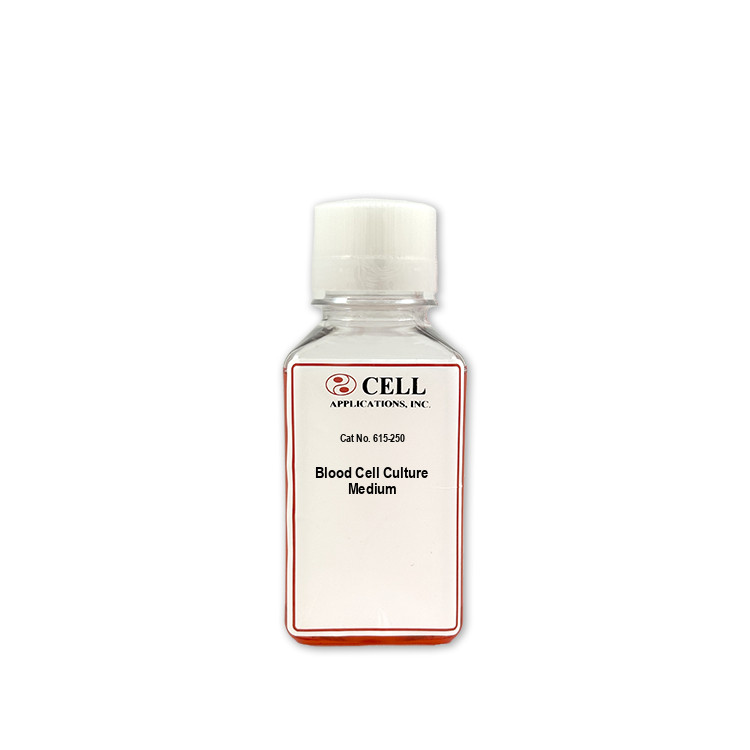
Human Blood Cell Medium
Human Blood Cell Culture Medium: Optimized and ready for use.
Type: Culture Medium
Size: 250 ml
Price: $91.00
Description
 Human Blood Cell Medium carefully optimized for the characteristics and requirements unique to Human Blood Cells (B Cells, T Cells, Monocytes and Mononuclear Cells). Attention to detail ensures ideal cell health, viability, performance, physiology, morphology, consistency and data.
- Human Mononuclear Cells from Bone Marrow: HMNC-BM
- Human Peripheral Blood Mononuclear Cells: PBMC/HMNC-PB
- Human Peripheral Blood CD14+ Monocytes: HPBM
- Human Peripheral Blood CD19+ B Cells: HPBB
- Human Peripheral Blood CD4+ T Cells: HPBT
In vivo, hematopoietic cells exist across distinct physiological compartments depending on their differentiation stage. Immature hematopoietic progenitors develop within specialized bone marrow niches, whereas mature, functional immune cells circulate throughout the vascular system and traffic into peripheral tissues. Throughout these stages, these cells are exposed to tightly regulated gradients of nutrients, hormones, and signaling molecules.
Specialized in vitro blood cell media seek to provide a controlled environment that supports these specific life stages outside the body. Because hematological primary cells lack the traditional attachment mechanisms of structural cell types like dermal fibroblasts or epithelial cells, they are typically maintained in suspension or in non-tissue culture-treated plates. The medium acts as a vital support system, balancing osmotic pressure and supplying precise concentrations of required signaling molecules.
The primary function of blood cell media is to preserve the biological fidelity of hematological cells so that researchers can investigate immune mechanics, hematopoiesis, and hematologic malignancies. By establishing highly reproducible growth and maintenance conditions, these specialized formulations minimize unwanted, spontaneous cell activation or premature cell death in culture.
When blood cells encounter immune challenges, pathogens, or chemical substances in an optimized medium, they can execute complex downstream signaling cascades. This includes modulating specific gene expression programs, altering cell-surface homing receptors, and secreting characteristic profiles of chemokines and interleukins. However, if the underlying medium configuration lacks the necessary nutrient balances or is compromised by suboptimal serum components, the primary cells can undergo rapid loss of viability or exhibit artifactual activation states, which can obscure experimental outcomes.
 Powered by Bioz