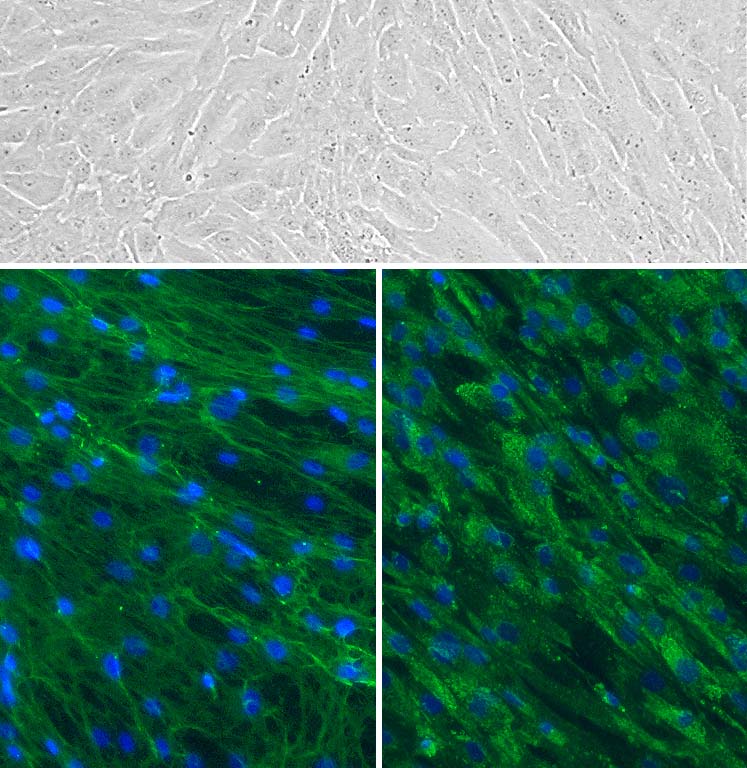
Human Colonic Fibroblasts: HCnF
Human Colonic Fibroblasts (HCnF) are specialized mesenchymal cells derived from the connective tissues of the human colon.
Description
Human Colonic Fibroblasts (HCnF) are specialized mesenchymal cells derived from the connective tissues of the human colon. As a heterogeneous population of stromal cells, they serve as the primary architects of the intestinal microenvironment, balancing structural support with dynamic signaling roles that govern mucosal health and disease. Unlike immortalized primary cells or transformed cell lines, HCnF are human primary colonic fibroblast cultures that retain the physiological signaling properties of the native organ, making them essential for high-fidelity cell biology research.
In the healthy colon, HCnF contribute to the formation of the extracellular matrix expansion (ECM), providing the non-rigid extracellular matrix framework necessary for tissue elasticity. They synthesize a complex array of proteins, including fibrillar collagens (Types I and III) and basement membrane components (Collagen IV). Furthermore, they actively regulate intestinal homeostasis by secreting matrix metalloproteinases (MMPs) and their inhibitors (TIMPs), ensuring a balanced rate of remodeling.
HCnF are critical for maintaining the epithelial cells of the colonic mucosa. Through the secretion of morphogens (such as WNTs, BMPs, and R-spondins), these fibroblasts modulate the stem cell niche, driving the continuous regeneration of the epithelium. This secretory profile is highly specialized; single-cell studies confirm that these cells are not monolithic but consist of distinct subsets derived from the embryonic mesoderm that possess unique markers and functions.
The interaction between HCnF and other cell types—such as endothelial cells (which form the vasculature), resident T cell populations, and other stromal cell subsets—is vital for coordinating the immune response and maintaining barrier integrity. In disease states, this crosstalk is frequently disrupted, leading to pathological changes such as bowel stenosis.
HCnF are indispensable for investigating the cellular mechanisms of gastrointestinal pathologies, particularly where human-relevant data is required to complement findings from human cells or rodent models:
- Inflammatory Bowel Disease (IBD): Researchers utilize HCnF to study the dysregulated signaling in Crohn’s disease and ulcerative colitis. In these conditions, chronic inflammation and mechanical stiffness trigger the differentiation of fibroblasts into activated myofibroblasts, leading to the pathological scarring and strictures that characterize fibrotic human intestinal tissue.
- Cancer Research: HCnF are increasingly used to study colon carcinogenesis, particularly the transition into cancer associated fibroblasts (CAFs). These activated fibroblasts modify the tumor microenvironment to support the growth and metastasis of tumor cells and human colon cancer cells. By comparing these models against standard cancer cell lines or Caco-2 Cells, scientists can better map the transition of fibroblasts into a pro-tumorigenic cell type.
- Translational Validation: To ensure the clinical relevance of gene expression studies, researchers often validate their HCnF findings against mesenchymal stem cells or stable cells to confirm that the observed stromal responses are genuinely representative of the human colonic niche.
Because they are highly durable in culture, HCnF provide a reliable, physiologically relevant system for exploring the complex interplay between the extracellular matrix, immune signaling, and neoplastic progression in the human digestive system.
Human Colonic Fibroblasts (HCnF) are primary cells derived from human colon. HCnF are cultured in Colonic Fibroblast Growth Medium. HCnF can propagate to 10 population doublings when cultured under the recommended conditions.
Characterization: Positive for fibronectin and fibroblast surface protein expression by ICC staining
Details
| Tissue | Normal healthy human colon tissue |
|---|---|
| QC | No bacteria, yeast, fungi, mycoplasma, virus |
| Bioassay | Attach, spread, proliferate in Growth Med |
| Kit | Cryovial frozen HCnF (710Cn-05a), Growth Medium (7115-500), Subcltr Rgnt Kit (090K) |
| Proliferating | Shipped in Gr Med, 2nd psg (flasks or plates) |
| Doublings | At least 15 |
| Applications | Laboratory research use only (RUO). Not for human, clinical, diagnostic or veterinary use. |
Resources
FAQs
Need More Help?
Visit our comprehensive FAQ page for detailed answers to common questions.
Need More Help?
Visit our comprehensive FAQ page for detailed answers to common questions.
Primary Cell FAQs