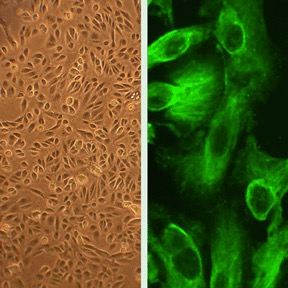
Human Renal Proximal Tubular Epithelial Cells: HRPTEpC
Human Renal Proximal Tubular Epithelial Cells (HRPTEpC) are highly specialized renal epithelial cells that form the structural and functional foundation of the proximal convoluted and straight tubules of the nephron.
Description
Human Renal Proximal Tubular Epithelial Cells (HRPTEpC) are highly specialized renal epithelial cells that form the structural and functional foundation of the proximal convoluted and straight tubules of the nephron. Positioned immediately downstream of the glomerulus, these cells are the first to encounter the large volume of glomerular filtrate. In vivo, they are responsible for the massive, energy-dependent reabsorption of water, electrolytes, and essential nutrients. Because they represent the primary site for the active clearance and intracellular accumulation of xenobiotics, renal tubular epithelial cells are central to studying normal renal function, the progression of chronic kidney disease (CKD), and the mechanisms of drug-induced renal toxicity.
When designing an in vitro layout, selecting the appropriate cellular platform is critical. While continuous cell line options are frequently utilized due to ease of handling and high scalability, performance varies significantly by species and origin. For example, HK-2 is an immortalized human proximal tubule cell line, whereas LLC-PK1 is a porcine-derived renal epithelial line. Furthermore, immortalized lines vary dynamically in their phenotype—some retain select proximal features, while others show reduced or altered transporter expression depending on the cell line and culture conditions. Consequently, establishing a primary culture of HRPTEpC serves as one of several complementary gold-standard approaches for high-fidelity physiological screening. Utilizing a primary cell system isolated directly from human tissue provides an essential vitro model that preserves authentic metabolic pathways and advanced transporter kinetics, making it a valuable asset for modern drug development and predictive safety pipelines.
-
Modeling Acute and Chronic Renal Disease: HRPTEpC play a dual role as both targets of and active contributors to injury in progressive kidney disease. Following an ischemic or toxic insult, these cells release critical inflammatory mediators and cytokines that drive acute inflammatory processes. If the injury is severe or sustained, researchers utilize primary cultures to map how partial EMT or maladaptive epithelial responses promote interstitial fibrosis via profibrotic signalling. Rather than undergoing a wholesale conversion into matrix-secreting fibroblasts, damaged renal tubular epithelial cells engage in paracrine signaling loops that activate adjacent myofibroblasts, anchoring the progression of chronic renal disease.
-
Glomerular-Tubular Crosstalk and Crescentic Glomerulonephritis: In severe autoimmune and inflammatory conditions like crescentic glomerulonephritis, downstream renal tubule sections suffer extensive secondary damage. Severe disruption of the upstream glomerular filtration barrier allows inflammatory cells, plasma proteins, and active coagulation factors to spill directly into the tubular lumen. HRPTEpC respond to this downstream toxic cocktail by upregulating pro-inflammatory pathways, amplifying local tissue remodeling, and accelerating nephron loss.
-
Renal Transplantation and Ischemia-Reperfusion Injury: During the process of renal transplantation, periods of cold and warm ischemia followed by sudden reperfusion induce severe metabolic stress in proximal tubule cells. Primary HRPTEpC models are utilized to dissect the cellular cascades of ischemia-reperfusion injury, enabling researchers to test novel cytoprotective strategies aimed at preserving graft viability and accelerating post-transplant functional recovery.
-
Investigating Endothelial-Epithelial Interactions: In vivo, the proximal tubule is wrapped in a dense network of peritubular capillaries lined by specialized endothelial cells. This intimate structural proximity is essential for matching tubular reabsorption with capillary uptake. Culturing HRPTEpC alongside microvascular endothelial cells in advanced fluidic devices allows investigators to study the paracrine signaling loops that maintain barrier integrity and drive microvascular rarefaction during chronic injury.
-
Regenerative Medicine and Alternative Therapies: Beyond traditional toxicology screening, understanding the baseline proliferation and repair limits of HRPTEpC provides crucial benchmarks for regenerative therapies. Researchers frequently compare the physiological performance and secretory profiles of primary epithelial cultures against differentiated stem cells (such as iPSCs or mesenchymal stromal/stem cells [MSC]) to evaluate their potential for bioartificial kidney components or cell-based therapeutic applications.
Details
| Tissue | Normal healthy human Kidney | |
|---|---|---|
| QC | No bacteria, yeast, fungi, mycoplasma, virus | |
| Bioassay | Attach, spread, proliferate in Growth Med | |
| Cryovial | 500,000 HRPTEpC (1st or 2nd psg) frozen in Basal Med w/ 10% FBS, 10% DMSO | |
| Kit | Cryovial frozen HRPTEpC (930-05a), Growth Medium (911-500), Subcltr Rgnt Kit (090K) | |
| Proliferating | Shipped in Tsfr Med, psg 3, flasks or plates | |
| Doublings | At least 6 | |
| Applications | Laboratory research use only (RUO). Not for human, clinical, diagnostic or veterinary use. |
Resources
FAQs
Need More Help?
Visit our comprehensive FAQ page for detailed answers to common questions.
Need More Help?
Visit our comprehensive FAQ page for detailed answers to common questions.
Primary Cell FAQs Powered by Bioz