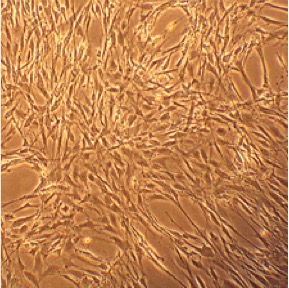
Rat Skeletal Muscle Cells: RSkMC
Rat Skeletal Muscle Cells (RSkMC) are specialized contractile cells isolated directly from healthy post-natal or adult rat skeletal muscle tissue.
Description
Rat Skeletal Muscle Cells (RSkMC) are specialized contractile cells isolated directly from healthy post-natal or adult rat skeletal muscle tissue. Within the native living organism, skeletal muscle represents the most abundant mammalian muscle tissue type, organized into highly structured, multinucleated myofibers that drive voluntary locomotion, maintain structural posture, and govern systemic metabolic homeostasis. As a primary cell model, isolated RSkMC mirror the true physiological architecture and biochemical responsiveness of intact tissue far more accurately than continuous, immortalized cell lines. For instance, continuous lines — such as the mouse-derived C2C12 myoblast line or the rat-derived L6 line — can exhibit altered genomic karyotypes, drifted insulin sensitivity profiles, and altered fusion/differentiation kinetics over extended serial passaging. However, because they are primary cultures, RSkMC possess a finite proliferative lifespan and limited self-renewal capacity in vitro. Over extended subculturing, they experience progressive replicative senescence, a decline in fusion fidelity, and a loss of key metabolic receptors. Consequently, maintaining careful low-passage windows is essential when utilizing these cells to model human skeletal muscle mechanics. Historically, primary muscle isolations faced significant challenges regarding purity; standard harvest protocols are frequently susceptible to overgrowth by contaminating smooth muscle cell populations from local vasculature or fast-proliferating interstitial fibroblasts. To counter this, modern workflows utilize selective media formulations and precise physical purification techniques (such as pre-plating or fluorescence-activated cell sorting). These steps suppress non-myogenic overgrowth, yielding highly enriched skeletal muscle cell populations capable of executing synchronized alignment, elongation, and fusion into contractile, multinucleated myotubes in vitro. Primary RSkMC provide a robust, high-fidelity experimental framework to investigate mammalian muscle biology, serving as a critical intermediate model for examining human neuromuscular and metabolic diseases:
- Glucose Metabolism, Insulin Resistance, and Diabetes: Because skeletal muscle is the principal site for insulin-stimulated glucose disposal in the mammalian body, RSkMC serve as an indispensable tool for mapping metabolic pathways. Researchers utilize this cell system to investigate the intracellular trafficking of Glucose Transporter 4 (GLUT4) in response to insulin stimulation or mechanical contraction analogues. Cultured RSkMC models are heavily utilized to dissect the molecular mechanisms underlying glucotoxicity, lipotoxicity, and insulin receptor desensitization, providing a highly translatable platform for studying type 2 diabetes and screening novel insulin-sensitizing pharmaceuticals.
- Muscle Atrophy, Myopathies, and Sarcopenia: Pathological muscle atrophy—the progressive wasting of muscle mass—is a debilitating feature of chronic clinical conditions, including cancer cachexia, denervation, and age-related sarcopenia. Investigators deploy RSkMC to model these wasting states in vitro by introducing catabolic stimuli such as dexamethasone or pro-inflammatory cytokines. This setup allows researchers to trace the activation of major proteolytic pathways, specifically the ubiquitin-proteasome system via muscle-specific E3 ubiquitin ligases like MuRF1 and MAFbx/Atrogin-1. This targeted model is widely integrated into drug discovery pipelines aimed at identifying therapeutic counter-measures to halt or reverse muscle atrophy.
- Muscle Regeneration and Stem Cell Dynamics: Following acute injury or chronic degenerative damage, skeletal muscle tissue relies on a highly coordinated process of muscle regeneration to restore mechanical function. This regenerative cascade is driven by a resident, quiescent stem cell population known as satellite cells, which are nestled between the basal lamina and the sarcolemma of mature myofibers. When activated, these muscle-specific stem cells proliferate, transition into myogenic progenitors (myoblasts), downregulate stemness markers, and sequentially express master transcription factors—such as MyoD and Myogenin—to repair or replace damaged fibers. RSkMC isolates containing these myogenic progenitors allow investigators to map the extracellular cues, matrix mechanics, and Notch/Wnt signaling pathways that govern successful muscle regeneration
- Comparative Biology and In Vitro Toxicology Screening: In translational research, RSkMC are widely utilized in comparative profiling studies alongside human skeletal muscle cells to identify conserved mammalian signaling pathways and validate cross-species therapeutic targets. When analyzing drug clearance or xenobiotic metabolism, primary muscle cells effectively model muscle-intrinsic effects and localized biochemical toxicity, though they do not capture full, whole-organism absorption, distribution, metabolism, and excretion (ADME) profiles. Furthermore, investigators must account for inherent species differences in receptor signaling and downstream drug responses; therefore, cross-validation with human primary cells and in vivo models remains the standard benchmark for translating preclinical RSkMC discoveries into human clinical scenarios
Rat Skeletal Muscle Cells (RSkMC) provide a useful system to study many aspects of muscular function and disease and can serve as an intermediate model of human diseases. Skeletal Muscle Cells also play an instrumental role in the glucose metabolism and diabetes.
Details
| Tissue | Normal health rat limb skeletal muscle | |
|---|---|---|
| QC | No bacteria, yeast, fungi, mycoplasma | |
| Bioassay | Attach, spread, proliferate in Growth Med | |
| Cryovial | 500,000 RSkMC (1st passge) frozen in Basal Medium w/ 10% FBS, 10% DMSO | |
| Kit | Cryovial frozen RSkMC (R150-05), Growth Medium (R151-500), Subcltr Rgnt Kit (090K) | |
| Proliferating | Shipped in Gr Med, 2nd psg (flasks or plates) | |
| Doublings | At least 10 | |
| Applications | Laboratory research use only (RUO). Not for human, clinical, diagnostic or veterinary use. |
Resources
FAQs
Need More Help?
Visit our comprehensive FAQ page for detailed answers to common questions.
Need More Help?
Visit our comprehensive FAQ page for detailed answers to common questions.
Primary Cell FAQs Powered by Bioz