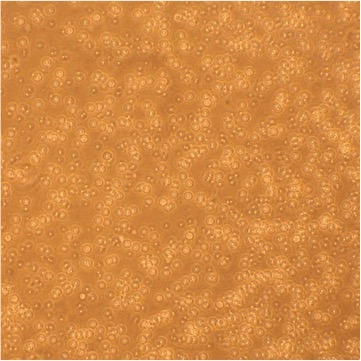
Human Peripheral Blood CD14+ Monocytes: HPBM
Human Peripheral Blood Monocytes: HPBM
Human Peripheral Blood Monocytes (HPBM) are CD14+ monocytes isolated and purified from human peripheral blood of healthy donors and are the precursors of tissue macrophages and dentritic cells.
Description
Human Peripheral Blood Monocytes (HPBM) are a critical cell type within the immune system, functioning as the circulating precursors to tissue macrophages and dendritic cells (or a dendritic cell lineage). As a foundational cell population for cell biology research, these human primary cells are isolated from peripheral blood and are central to the orchestrated immune response. In a healthy individual, the monocyte count (or absolute monocytes) represents a significant fraction of the circulating white blood cell pool. While clinical assessments like a complete blood count (CBC) might occasionally identify elevated monocytes—which can indicate underlying blood disorders—isolated HPBM provide a standardized in vitro model for studying precise immunological mechanisms, including cell-mediated cytotoxicity and the production of pro-inflammatory mediators. The most prevalent subset, CD14 monocytes, constitutes approximately 80%–90% of circulating monocytes. These large monocytes (~18 μm in diameter) express a high-affinity component of the lipopolysaccharide (LPS) receptor complex, enabling rapid detection of bacterial pathogens.
- Surface Marker Profiles: Compared to non classical monocytes (CD16+), the CD14+ subset exhibits higher expression of CD62L (L-selectin) and CD11b (Mac-1), and lower levels of MHC class II.
- Isolation and Utility: High-quality cell isolation is vital to ensure that this human mononuclear cells (human PBMC) fraction is free of other circulating populations such as T cells (or a T cell), NK cells, B cell populations, or residual red blood cells. Using these highly purified HPBM allows researchers to conduct studies without the interference of heterophile antibodies or non-specific signaling from neighboring lineages.
HPBM are not merely passive precursors; they are active agents of immune activation that bridge innate and adaptive immunity.
- Homeostasis and Signaling: Research utilizing these cells has significantly advanced our understanding of cellular defense. For instance, HPBM have been utilized to investigate the antioxidant activity of the NRF2 transcription factor, successfully identifying aldo-keto reductase (AKR) as a tightly regulated NRF2 target. This work has profound implications for understanding how the body manages oxidative stress and inflammation.
- Clinical Significance: Whether exploring the mobilization of cells from the bone marrow or investigating the molecular cues that drive a dendritic cell to initiate an adaptive T cell response, HPBM serve as an essential immune cell model. They are indispensable for deciphering how the body regulates the balance of high monocytes versus specialized tissue-resident populations.
Human PBMC—or more specifically, purified human PBMC fractions—are essential tools for modern biomedical workflows:
- Benchmarking Responses: Researchers utilize these models to evaluate candidate therapeutics, assess antibody efficacy, and track the maturation of myeloid lineages.
- Advancing Regenerative Pipelines: Beyond their role in immunity, these cells are frequently integrated into studies involving stem cell crosstalk. By providing a stable, primary background, HPBM enable reproducible assays that bridge the gap between basic immunobiology and the development of next-generation clinical interventions.
Human Peripheral Blood Monocytes (HPBM) provide a useful in vitro tool for studying various aspects of pathology and biology. Our CD14+ Monocytes are isolated and purified from human peripheral blood of healthy donors and cryopreserved immediately after isolation. HPBM are the precursors of tissue macrophages and dentritic cells and are central to immunological responses, including cell-mediated cytotoxicity and production of inflammatory mediators. The CD14 monocyte subset expresses a component of the lipopolysaccharide (LPS) receptor complex, are large with diameter of ~18 μm, represent ~80%–90% of circulating monocytes, and express higher levels of CD62L (L-selectin) and CD11b (also referred to as Mac-1 or CR3) and lower levels of MHC class II than do CD16+ monocytes. HPBM from Cell Applications, Inc. have been used to
- Investigate anti-oxidant activity of NF-E2-related transcription factor 2 (NRF2)
- Identify aldo-keto reductase (AKR) as a tightly regulated human target of NRF2 that can be used as a marker of NRF2 activity
Details
| Tissue | Normal healthy human peripheral blood |
|---|---|
| QC | No bacteria, yeast, fungi, mycoplasma, virus |
| Character | CD14 positive selection |
| Cryovial | 5,000,000 HPBM frozen right after isolation in DMEM w/ 45% FBS, 10% DMSO |
| Kit | Cryovial Frozen HPBM (6906-50a), Maintenance Medium (615-250) |
| Doublings | N/A - Blood cells don't proliferate in vitro |
| Applications | Laboratory research use only (RUO). Not for human, clinical, diagnostic or veterinary use. |
Resources
FAQs
Need More Help?
Visit our comprehensive FAQ page for detailed answers to common questions.
Need More Help?
Visit our comprehensive FAQ page for detailed answers to common questions.
Primary Cell FAQs Powered by Bioz