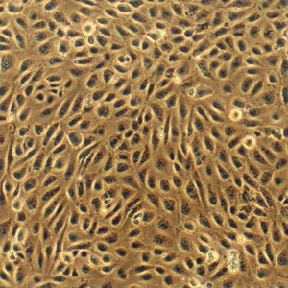
Bovine Pulmonary Artery Endothelial Cells: BPAEC
Bovine Pulmonary Artery Endothelial Cells: BPAEC
Description
Bovine Pulmonary Artery Endothelial Cells (BPAEC) are a well-characterized primary cell types often sourced from the pulmonary vasculature, providing a useful experimental model system to study vascular function, barrier regulation, and disease mechanisms. Because macrovascular vascular endothelial cells share numerous signaling pathways with human pulmonary artery endothelia, researchers frequently utilize these cultures alongside bovine aortic endothelial cells to investigate physiological processes such as angiogenesis, selective permeability, and nitric oxide production.
While these primary cultures offer valuable experimental models, rigorous quality control — including testing for common contaminants like mycoplasma, bacteria, and fungi — is essential to maintain culture fidelity. Furthermore, establishing a reliable experimental baseline requires careful handling and standardized protocols, whether utilizing an existing collection or expanding stocks for downstream assays.
BPAEC have been widely utilized in cardiovascular and toxicological research to uncover fundamental cellular mechanisms and evaluate the impact of environmental or metabolic exposure:
- Oxidative Stress and Cytoskeletal Dynamics: Studies have demonstrated that the induction of cellular antioxidant responses during oxidative stress involves specific regulatory factors. Investigations sometimes employ fluorescent probes and cellular stains—such as MitoTracker Red CMXRos for mitochondrial networks, phalloidin-conjugates (e.g., Alexa Fluor–conjugated phalloidin) for actin filament visualization, or antibodies directed against cytoskeletal proteins—to evaluate cellular morphology and stress responses under defined experimental conditions.
- Vascular Permeability and Lung Injury: Models using bpae cells have helped clarify pathways relevant to edema and acute lung injury, showing how inflammatory stimuli can disrupt barrier integrity or how specific kinase inhibitors can mitigate hyperpermeability in vitro.
- Receptor Signaling and Pathological Models: Research leveraging these cells has explored various pathways, such as evaluating how pharmacological agents modulate vasoactive signaling, investigating potential mechanisms of pollutant-induced cellular stress, and examining vascular responses relevant to metabolic and inflammatory conditions.
Through these diverse applications, Bovine pulmonary artery endothelial cells (BPAEC) serve as a practical platform for exploring broader biomedical concepts mapped across literature mesh terms, contributing to foundational in vitro discovery regarding inflammation, atherosclerosis, and vascular pathobiology.
Bovine pulmonary artery endothelial cells (BPAEC) from Cell Applications, Inc. provide an excellent model system to study many aspects of cardiovascular function and disease. For example, they have been used to investigate critical signaling pathways and mechanisms relevant to proper endothelial function, such as angiogenesis, permeability and NO production. Others have employed BPAEC to search for beneficial modulators for therapeutic use, study diabetes-associated complications related to cardiovascular function, investigate mechanisms of endothelial dysfunction related to environmental pollution, smoking, oxidative stress and inflammation and search for potential treatments, and develop layered co-cultures of liver and endothelial cells that demonstrate superior liver-specific features.
BPAEC from Cell Applications, Inc. have been utilized in multiple research publications, for example to:
- Determine that induction of cellular antioxidant glutathione during moderate oxidative stress involves ARE-binding factors in a MAP kinase independent mechanism
- Show that HGF transiently increases transcription of angiotensin-converting enzyme gene via activation of Egr-1, whereas PMA regulation involves Egr-1 and additional factors
- Elucidate the therapeutic effects of Angiotensin I-converting enzyme (ACE) inhibitors, and the results revealed that they provide an additional benefit to patients by activating bradykinin B1 receptor leading to prolonged nitric oxide (NO) production in endothelial cells
- Demonstrate that thiol-reactive compounds in cigarette smoke activate NADPH oxidase and increase superoxide anion production, reducing NO levels and resulting in endothelial dysfunction
- Reveal that mercury, a risk factor for cardiovascular diseases, induces PLA2 activation in endothelial cells, followed by PLD activation, and the process is mediated by thiol-redox alteration, ROS and Ca2+/calmodulin
- Demonstrate that adiponectin protects against the hyperoxia-induced endothelial barrier dysfunction and lung damage by relieving oxidative stress and normalizing thiol-redox status
- Show that TGF-β1–induced endothelial permeability involves focal adhesion and cytoskeletal rearrangement through both FAK/Src-dependent and -independent pathways
- Demonstrate that exposure to lipopolysaccharides inhibits AMPK (which is required for normal endothelial barrier function) and causes endothelial hyperpermeability and lung injury
- Demonstrate the effectiveness of myosin light chain kinase inhibitors in decreasing endothelial hyperpermeability
- Show that angiotensin II-induced apoptosis relies on activation of AMPK for ATP production, as well as for activation of SHP-2 in a signaling cascade leading to Bcl-x(L) mRNA destabilization
- Evaluate therapeutic potential of aminoguanidine in protecting endothelia from hyperglycemic complications in diabetes by blocking the reactivity of the sugar-derived dicarbonyls and preventing the formation of advanced glycation end products
- Demonstrate the roles of Egr-1, ATF-2 and Ets-1 in the regulation of angiotensin converting enzyme promoter by phorbol ester
- Develop a therapeutic peptide based on a fragment of Listeria monocytogenes internalin B that prevented angiotensin II-induced apoptosis and stimulated proliferation and cell motility by activating ERK1/2, STAT3, and phosphatidylinositol 3-kinase/Akt pathways
- Develop layered co-cultures of liver and endothelial cells that demonstrate superior liver-specific features
Details
| Tissue | Normal healthy bovine pulmonary artery | |
|---|---|---|
| QC | No bacteria, yeast, fungi, mycoplasma | |
| Character | DiI-Ac-LDL uptake: Positive | |
| Bioassay | Attach, spread, proliferate in Growth Med | |
| Cryovial | 500,000 BPAEC (2nd passage) frozen in Basal Medium w/ 10% FBS & 10% DMSO | |
| Kit | Cryovial frozen BPAEC (B302-05), Growth Medium (B211-500), Subculture Rgnt Kit (090K) | |
| Proliferating | Shipped in Gr Med, 3rd psg (flasks or plates) | |
| Doublings | At least 16 | |
| Applications | Laboratory research use only (RUO). Not for human, clinical, diagnostic or veterinary use. |
Resources
FAQs
Need More Help?
Visit our comprehensive FAQ page for detailed answers to common questions.
Need More Help?
Visit our comprehensive FAQ page for detailed answers to common questions.
Primary Cell FAQs Powered by Bioz