Human Coronary Artery Endothelial Cells: HCAEC
Human Coronary Artery Endothelial Cells (HCAEC) are highly specialized vascular endothelial cells isolated from the tunica intima of the human coronary arteries.
Description
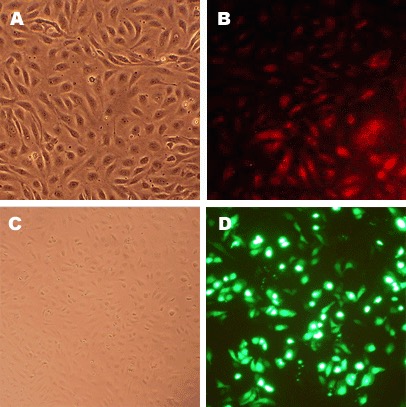
Human Coronary Artery Endothelial Cells (HCAEC) — alternatively designated as human primary coronary endothelial cells in the literature — are highly specialized vascular endothelial cells isolated from the tunica intima of the human coronary arteries. Unlike a transformed continuous cell line or immortalized cell types, these diverse primary cells better retain their native tissue-specific identity, metabolic memory, and precise physiological responsiveness ex vivo. To maintain their specific characteristics and support controlled proliferation without triggering premature senescence, they require a specialized MesoEndo Endothelial Cell Growth Medium or an optimized endothelial cell growth media system. These systems are typically composed of an endothelial cell basal medium supplemented with an essential cocktail of growth factors and components. Quality control verification for these cells routinely includes confirming high cell viability and positive immunocytochemical staining for definitive endothelial markers, including vWF (von Willebrand factor), CD31/PECAM1, and VE-cadherin.
In the human body, HCAEC form the continuous, non-thrombogenic inner monolayer of the arteries that branch directly from the root of the human aorta to supply oxygenated blood to the myocardium. This unique anatomical location exposes the coronary endothelium to highly demanding hemodynamic environments, including intensive cyclic stretch, strain, and high pulsatile pressure. In comparative vascular biology, HCAEC serve as an important model for investigating endothelial heterogeneity alongside human aortic endothelial cells (HAOEC), carotid artery endothelial cells (HCTAEC), and peripheral macrovascular systems. To decouple tissue-specific endothelial properties from confounding donor variables, researchers often utilize matched multi-tissue panels sourced from a single donor. Lots are rigorously screened per regulatory standards to confirm they are free from common bloodborne pathogens such as hepatitis B, HIV, and any contaminating bacterium or mycoplasma. Specialized HLA typed donors are sometimes used to support targeted co-culture models.
The primary biological function of HCAEC is to maintain coronary vascular homeostasis by modulating vessel tone, regulating leukocyte trafficking, and providing a selective permeability barrier. Because the coronary vasculature is a primary site for severe cardiovascular disease, these cells are highly sensitive to systemic metabolic disruptions. Under resting conditions, HCAEC produce protective nitric oxide (NO) via endothelial nitric oxide synthase, or eNOS (NOS3), to preserve vascular relaxation. However, under chronic stress induced by hyperglycemia or advanced glycation end products, these cells can undergo uncoupling of the eNOS enzyme, which shifts its function to produce destructive superoxide radicals. This reduction in NO bioavailability can contribute to endothelial dysfunction. Consequently, the cells activate an inflammatory response, upregulating critical cellular adhesion molecules — including E-selectin, VCAM-1, and ICAM-1 — that coordinate the tethering and firm adhesion of circulating immune cells to initiate the fatty streaks that drive progressive vascular diseases like atherosclerosis.
In translational cardiology and tissue engineering, HCAEC function as a widely used human-background platform for exploring coronary artery disease (CAD) mechanisms, testing stent biocompatibility, and screening novel cardioprotective drugs. Safety pharmacologists utilize HCAEC monolayers to evaluate how intravascular or blood-borne exposures — such as drug elution from stents, high-density lipoprotein (HDL) particles, or circulating cytokines — mitigate vascular matrix inflammation and cell death. While nonvascular cell types (such as human podocytes or human gastric fibroblasts) are deployed for complementary systemic toxicity panels, HCAEC remain indispensable for modeling the precise cell-type-specific mechanics of the coronary wall.
Furthermore, these primary cells are heavily integrated into bioengineering pipelines. They are seeded onto synthetic elastomeric scaffolds or utilized alongside pluripotent stem cell lines or mesenchymal stem cell populations to construct tissue-engineered vascular grafts and biomimetic myocardial patches, helping researchers optimize endothelial cell medium protocols to establish stable, non-thrombogenic coronary conduits in vitro.
- Understand the mechanism of the anti-inflammatory properties of HDL, and demonstrate for the first time that mature miRNA can control gene expression in a cell where it is neither transcribed nor processed
- Study mechanisms of angiogenesis, as well as oxidative stress and inflammation related pathways in endothelia, including gender and race specific differences in patients with peripheral artery disease
- Elucidate molecular mechanisms of various cardiovascular risk factors, including those associated with diabetes
- Understand the mode of action and cardiovascular protection effects of various natural compounds, vitamins and drug candidates
- Develop and evaluate scaffolds and hydrogels for cardiac tissue engineering, and new treatment strategies to prevent stent restenosis
- Compare effects of BMP-4 on HCAEC and Human Pulmonary Artery Endothelial Cells (HPAEC, also from Cell Applications, Inc.)
- Show that only in HCAEC BMP-4 treatment induced ROS, activated NF-kB, ICAM-1 and increased monocyte adhesiveness, explaining why its upregulation leads to atherosclerosis and hypertension in the systemic, but not pulmonary circulation
Details
| Tissue | Normal healthy human coronary artery | |
|---|---|---|
| QC | No bacteria, yeast, fungi, mycoplasma, virus | |
| Character | Factor VIII-related Ag, DiI-Ac-LDL uptake | |
| Bioassay | Attach, spread, proliferate in Growth Med | |
| Cryovial | 500,000 HCAEC (2nd passage) frozen in Basal Medium w/ 10% FBS, 10% DMSO | |
| Kit | Cryovial frozen HCAEC (300-05a), Growth Med (212-500), Subculture Rgnt Kit (090K) | |
| Proliferating | Shipped in Gr Med, 3rd psg (flasks or plates) | |
| Doublings | At least 15 | |
| Applications | Laboratory research use only (RUO). Not for human, clinical, diagnostic or veterinary use. |
Resources
FAQs
Need More Help?
Visit our comprehensive FAQ page for detailed answers to common questions.
Need More Help?
Visit our comprehensive FAQ page for detailed answers to common questions.
Primary Cell FAQs Powered by Bioz