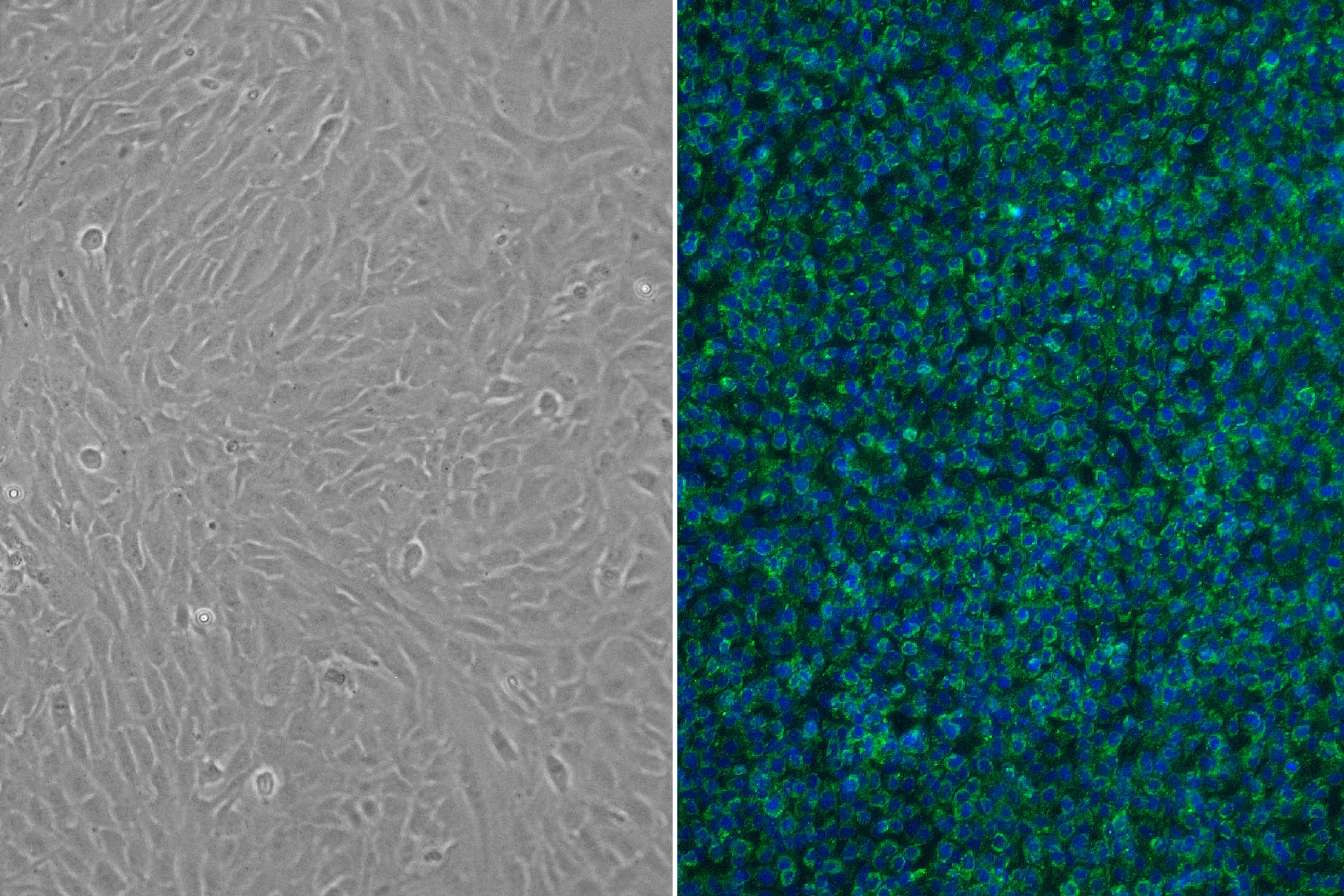
Human Hepatic Fibroblasts: HHF
Human Hepatic Fibroblasts (HHF) are primary mesenchymal cells residing within human liver tissue.
Description
Human Hepatic Fibroblasts (HHF) are primary mesenchymal cells residing within human liver tissue, within the complex vascular and interstitial architecture. In scientific literature, the term “hepatic fibroblast” denotes a functionally heterogeneous population that includes distinct mesenchymal subsets — most notably stellate cells (hepatic stellate cells, HSCs) and portal fibroblasts — so HHF is often used as a broad operational shorthand for cultured liver tissue fibroblast populations. The field also reflects an ongoing nomenclature discussion between “mesenchymal stem cells” and “mesenchymal stromal cells”; some international guidelines favor “stromal cells” for heterogeneous primary isolates when uniform single-cell stemness criteria are not met, though “mesenchymal stem cells” or specific primary designations may still be used contextually. In vitro, primary HHF are highly proliferative with limited self-renewal capacity; their population-doubling is strictly finite, and they show a progressive decline in expansion kinetics and gene expression profiles as passage number increases. Unlike transformed or immortalized cell lines, continuous models may develop altered genomic karyotypes, shifted paracrine profiles, and altered activation kinetics that may not reflect human tissue behavior. Because cell-type ratios and baseline signaling are sensitive to liver tissue context and donor factors—including chronic liver disease etiologies such as hepatitis C—functional endpoints are typically cross-validated across multiple donor lots. The exact cellular composition of an HHF isolate dictates its role in fibrosis. In many experimental settings, injured liver and chronic liver disease outcomes reflect activation of collagen producing cells, particularly activated hepatic stellate cells (hepatic stellate cell activation): Hepatic stellate cells (HSCs): Located in the perisinusoidal space (Space of Disse), quiescent HSCs are characterized by vitamin A (retinyl ester) lipid droplets. In liver fibrosis models, these stellate cells are a principal collagen-producing source and neighbor sinusoidal epithelial and immune niches, including Kupffer cells. Portal fibroblasts: Located in the connective tissue of the bile duct–associated portal tracts, these cells lack vitamin A storage droplets. They contribute preferentially to specific injuries, including cholestatic liver fibrosis associated with biliary disease. Injured liver contexts can also involve contributions from other mesenchymal sources, including mesothelial cells, but the proportional contribution is an active research area. The primary biological function of homeostatic HHF is to maintain baseline extracellular matrix composition and hepatic architectural integrity. Under chronic liver disease, persistent inflammation, or localized parenchymal injury, HHF can transition into myofibroblasts. For example, pro-fibrotic stimulation (most notably TGF-β1) drives hepatic stellate cell activation, during which HSCs lose vitamin A lipid droplets and upregulate α-smooth muscle actin (α-SMA), increase contractility, and deposit fibrillar collagen (primarily collagen Types I and III). Sustained activation promotes progressive hepatic fibrosis that contributes to cirrhosis in patients, with severe disruption of normal tissue structure and function, including in cirrhotic human liver. In cell biology, molecular biology, toxicology, and discovery pharmacology, HHF cultures are used as an human-background platform to explore hepatic fibrosis mechanisms, including fibrosis progression and drug-induced liver injury (DILI). Researchers use HHF to examine collagen remodeling and to screen anti fibrotic therapy candidates by measuring changes in gene expression (e.g., mRNA expression and gene expression profiles) and by modeling injured liver and fibrotic liver phenotypes in controlled systems. To capture liver tissue multicellular complexity of fibrotic liver or cirrhotic liver, HHF are increasingly paired with primary hepatocytes and Kupffer cells, often alongside hepatic sinusoidal endothelial cell models, to study metabolic and hepatotoxic mechanisms involving epithelial cells and other hepatic niche components. HHF secretome and EV/exosome-mediated signaling are also used to study paracrine molecular biology effects on neighboring cells. HHF are additionally used for cross-species comparisons, including comparisons to mouse liver models, to identify human-specific responses in fibrosis. Researchers frequently evaluate HHF alongside other organ fibrotic systems, such as pulmonary fibrosis models, to compare tissue-specific gene expression and pathway activation. Although HHF-derived exosomes show preclinical promise for acellular regenerative therapeutics, their universal efficacy and safety for patients with cirrhosis are not established as routine clinical therapy. Human Hepatic Fibroblasts (HHF) are one of the important cell types in the liver. HHF from Cell Applications, Inc. provide an excellent model system to study many aspects of human liver function, metabolism and pathophysiology. Human Hepatic Fibroblasts are primary cells derived from human liver and cultured in optimized Hepatic Fibroblast Growth Medium. HHF can propagate to 10 population doublings when cultured under the recommended conditions. Human Hepatic Fibroblasts are suitable for many cell-based assays including toxicity, drug screening and metabolism to study liver function, physiology and associated haptic diseases. Characterization: Positive for fibroblast surface protein expression by ICC staining.
Details
| Tissue | Normal healthy human liver tissue | |
|---|---|---|
| QC | No bacteria, yeast, fungi, mycoplasma, virus | |
| Bioassay | Attach, spread, proliferate in Growth Med | |
| Cryovial | 500,000 HHF (2nd passage) frozen in Basal Medium w/ 10% FBS, 10% DMSO | |
| Kit | Cryovial frozen HHF (712-05f), Growth Medium (7111-500), Subcltr Rgnt Kit (090K) | |
| Proliferating | Shipped in Gr Med, 2nd psg (flasks or plates) | |
| Doublings | At least 10 | |
| Applications | Laboratory research use only (RUO). Not for human, clinical, diagnostic or veterinary use. |
Resources
FAQs
Need More Help?
Visit our comprehensive FAQ page for detailed answers to common questions.
Need More Help?
Visit our comprehensive FAQ page for detailed answers to common questions.
Primary Cell FAQs