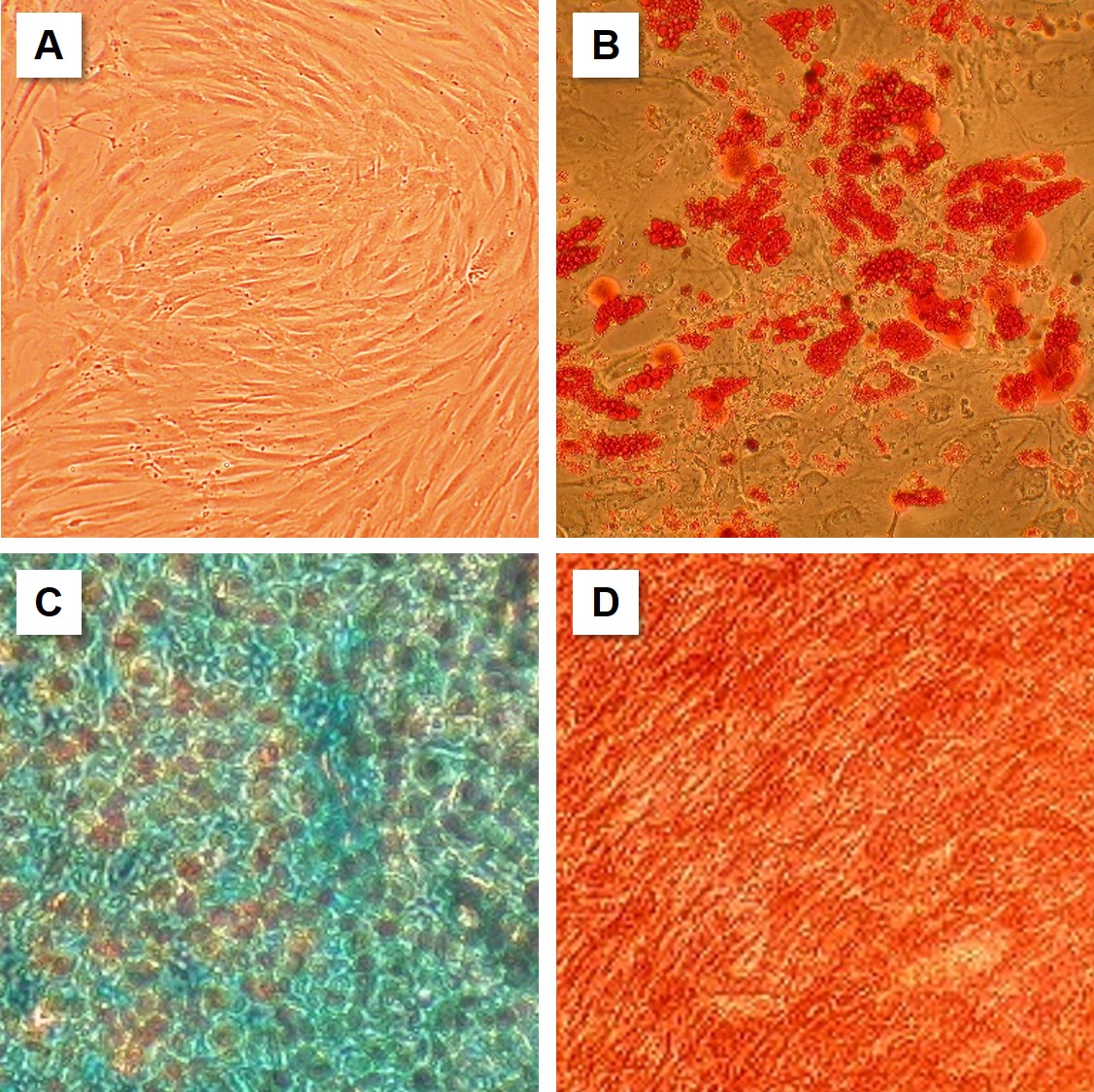
Human Mesenchymal Stem Cells from Bone Marrow: HMSC-BM
Human Mesenchymal Stem Cells from Bone Marrow (HMSC-BM) are primary multipotent cells isolated from adult human bone marrow aspirates.
Description
Human Mesenchymal Stem Cells from Bone Marrow (HMSC-BM) — alternatively designated as bone marrow-derived mesenchymal stem cells (BMSC) or marrow stromal cells — are primary multipotent cells isolated from adult human bone marrow aspirates. The scientific field routinely utilizes both “mesenchymal stem cells” and “mesenchymal stromal cell” designations interchangeably; however, certain international regulatory guidelines favor “stromal cells” for heterogeneous, tissue-isolated primary populations because true stemness capabilities are not uniformly verified across every individual cell. Isolated from the bone marrow stroma, these progenitors exist as plastic-adherent cells in vitro. Unlike a transformed continuous cell line, when expanded in specialized mesenchymal stem cell medium, these human MSC better retain their native genetic stability, receptor densities, and authentic paracrine profiles. However, their population-doubling capacity is finite; their proliferative kinetics and differentiation fidelity decline steadily with increasing passage numbers.
In the living organism, these adult stem cells reside within the highly complex structural compartments of the human bone marrow cavity, embedded in a specialized vascular and trabecular network. Strong evidence supports a perivascular or pericyte-like origin for a significant subset of these bone marrow cells, placing them in direct contact with the microvasculature. In this native bone marrow stroma, they do not function in isolation; they are surrounded by an intricate cellular matrix comprising bone cells (such as osteoblasts and osteoclasts), endothelial cells, fat cells, and an abundance of hematopoietic cells. Because a standard marrow aspirate is inherently mixed with blood, isolating these adherent progenitor cells requires separating them from highly abundant circulating elements, such as the red blood cell fraction, mature granulocytes, and other specialized blood cell lineages.
The primary biological function of bone marrow HMSC in vivo is to maintain structural connective tissue homeostasis, regulate the skeletal matrix, and provide vital supportive cues to the immune system and hematopoietic stem cell (HSC) niche. As multipotent progenitors, they possess a robust capacity for stem cell differentiation into specific skeletal cell lineages. Under native physical and chemical cues, they undergo osteogenic differentiation to become bone-forming osteoblasts, or chondrogenic differentiation to form cartilage-maintaining chondrocytes. However, standard in vitro protocols generate lineage-like cells rather than fully mature, integrated tissue structures without extensive conditioning.
Beyond structural tissue repair, HMSC-BM exert a powerful systemic influence via paracrine signaling rather than robust, long-term engraftment. When stimulated by localized inflammatory cytokines, they adaptively alter their gene expression to secrete potent immunomodulatory factors and extracellular vesicles that guide circulating immune cells, suppress T-cell proliferation, and mitigate pathological hyper-inflammation.
In translational cardiology, orthopedics, and immunology, human MSC platforms serve as a foundational benchmark tissue source. Safety pharmacologists and bioengineers integrate these cells into high-content screening workflows to trace master gene expression cascades, model bone remodeling, and test biomaterial scaffolds designed for tissue repair. They are also widely deployed in co-culture models to examine how marrow stromal elements support or subvert hematopoiesis during leukemic progression.
While extensively leveraged in the development of experimental cell therapy, cellular therapy, and targeted gene therapy protocols, researchers must remain cautious regarding clinical claims. The real-world efficacy of a cell transplant or stem cell transplantation setup varies significantly by geographic region, specific indications (such as graft-versus-host disease), and donor-to-donor variability. Consequently, standardizing culture parameters and cross-validating endpoints across multiple healthy donor lots remains essential for predictable in vitro-to-in vivo translation.
Details
| Tissue | Normal healthy human bone marrow (HMSC-BM) | |
|---|---|---|
| QC | No bacteria, yeast, fungi, mycoplasma, virus | |
| Character | Bone mineralization in Osteoblast Differentiation Med, Lipid accumulation in Adipocyte Diff Medium | |
| Bioassay | Attach, spread, proliferate in Growth Med | |
| Cryovial | 500,000 HMSC-BM frozen in Freezing Medium w/ 10% FBS, 10% DMSO | |
| Kit | Cryovial frozen HMSC (492-05a/f), Growth Medium (419-500), Subcltr Rgnt Kit (090K) | |
| Proliferating | Shipped in Gr Med, 3rd psg (flasks or plates) | |
| Doublings | At least 10 | |
| Applications | Laboratory research use only (RUO). Not for human, clinical, diagnostic or veterinary use. |
Resources
FAQs
Need More Help?
Visit our comprehensive FAQ page for detailed answers to common questions.
Need More Help?
Visit our comprehensive FAQ page for detailed answers to common questions.
Primary Cell FAQs Powered by Bioz