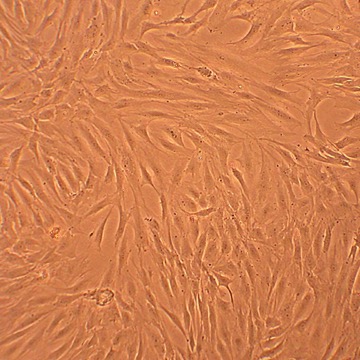
Human Osteoblasts-Osteoarthritis: HOb-OA. Bone forming cells, isolated from donor patient with OA.
Human Osteoblasts: Osteoarthritis: HOb-OA
Human Osteoblasts (HOb) are primary specialized bone cells from human bone tissue obtained from individuals undergoing joint surgery for advanced osteoarthritis.
Description
Human Osteoblasts: Osteoarthritis (HOb-OA) — often referred to as osteoarthritis HOb OA or osteoblasts isolated from OA patients — are primary cells obtained from individuals undergoing joint surgery for advanced osteoarthritis. As a key cell type in the skeletal system, these primary osteoblasts, which retain proliferative capacity in culture, serve as a highly relevant in vitro model to investigate the pathophysiology of knee osteoarthritis. Researchers utilize these cells to study the localized inflammatory signaling pathways and structural defects that define the disease, often utilizing specialized osteoblast growth medium to maintain phenotype. Unlike an immortalized cell line, these primary cells retain the epigenetic signatures of their source tissue, providing critical insights into how diseased osteoblasts interact with mesenchymal stem cells and other resident progenitors within the bone marrow.
Osteoarthritis is a whole-joint disease characterized by structural changes in the subchondral bone, articular cartilage degradation, and synovial inflammation.
- Bone Remodeling and Sclerosis: In a healthy joint, bone formation and bone resorption are tightly coupled to maintain skeletal integrity. However, in an osteoarthritis environment, this process becomes dysfunctional, leading to subchondral bone sclerosis.
- Mineralization Defects: Paradoxically, while the bone volume fraction increases, the bone matrix often displays inferior material properties. The tissue is frequently hypomineralized and structurally disorganized, manifesting as bone loss in specific trabecular regions despite thickening of the subchondral plate. These defects can be tracked via changes in pore size and matrix density.
The subchondral bone niche is a site of chronic, low-grade inflammation that influences the overlying cartilage and calcified cartilage layers.
- Regulation of Bone Turnover: Osteoblasts regulate osteoclasts through the coupled ligand system involving RANKL and osteoprotegerin (OPG). Dysregulation of the RANKL/OPG axis is a hallmark of OA, leading to excessive osteoclast activity and subchondral bone remodeling.
- Paracrine Signaling: These osteoblasts produce pro-inflammatory mediators that influence neighboring tissues, including OA cartilage. This paracrine signaling is critical for understanding how subchondral bone remodeling drives cartilage degradation and joint degeneration.
HOb-OA cells are indispensable tools in modern research areas aimed at identifying disease-modifying therapies.
- Mechanistic Modeling: Researchers use these cells to study the effects of molecular weight variants of signaling molecules (e.g., growth factors, cytokines) and their impact on targeted signaling pathways.
- Advanced Engineering: Beyond basic 2D culture, these cells are integrated into complex 3D models and microfluidic platforms. In these systems, researchers must account for hardware-specific variables—such as available rotor adapters for centrifugal seeding, cap color for reagent tracking, and ensuring the sterile status of the culture environment—to maintain reproducibility.
- Species Reactivity: While these cells are specifically human-derived, the protocols established for HOb-OA often inform studies across different species reactivity contexts, aiding in the development of orthopedic therapies applicable across species, including preclinical models for drug testing.
Human Osteoblasts-Osteoarthritis (HOb-OA) are isolated from bone of patients with osteoarthritis (OA) and provide an excellent model system to study the pathophisiology of that disease in vitro, including matrix mineralization, effects of inflammatory mediators and bone morphogenic proteins, physiological control of bone remodeling and regulation of bone metabolism.
Characterization: Positive for bone mineralization.
Details
| Tissue | Bone from donors w/ osteoarthritis | |
|---|---|---|
| QC | No bacteria, yeast, fungi, mycoplasma, virus | |
| Cryovial | 500,000 HOb-OA (2nd passage) frozen in Basal Medium w/ 10% FBS, 10% DMSO | |
| Kit | Cryovial frozen HOb-OA (406OA-05), Growth Medium (417-500), Subcltr Rgnt Kit (090K) | |
| Proliferating | Shipped Gr Med, 3rd psg (flasks or plates) | |
| Doublings | At least 10 | |
| Applications | Laboratory research use only (RUO). Not for human, clinical, diagnostic or veterinary use. |
Resources
FAQs
Need More Help?
Visit our comprehensive FAQ page for detailed answers to common questions.
Need More Help?
Visit our comprehensive FAQ page for detailed answers to common questions.
Primary Cell FAQs Powered by Bioz