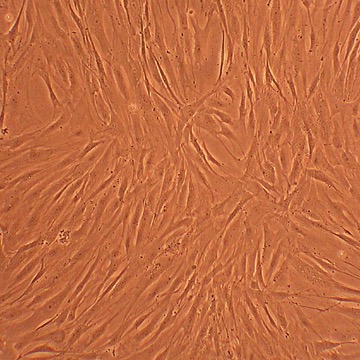
Human Osteoblasts-Rheumatoid Arthritis: HOb-RA. Bone forming cells isolate from donor patients with RA.
Human Osteoblasts: Rheumatoid Arthritis: HOb-RA
Human Osteoblasts (HOb) are primary specialized bone cells from human bone tissue isolated from patients undergoing surgery due to severe arthritis.
Description
Human Osteoblasts-Rheumatoid Arthritis (HOb-RA) — also referred to as human osteoblasts rheumatoid arthritis — are primary cells isolated from patients undergoing surgery due to severe arthritis. These cells serve as a critical in vitro model for investigating the molecular mechanisms of bone destruction and the severe suppression of osteoblast function that characterize the pathogenesis of rheumatoid inflammatory arthritis. While their osteogenic lineage and capacity for mineralization are verified, their phenotype is profoundly altered by chronic exposure to the autoimmune environment. Researchers typically employ specialized osteoblast growth medium to maintain these cells, noting that they differ significantly from other primary human models, such as human gastric fibroblasts or human podocytes.
Unlike osteoarthritis, which often involves localized subchondral sclerosis, rheumatoid arthritis is an autoimmune condition characterized by systemic bone loss and focal erosions at the joint margins and subchondral bone.
- Suppressed Bone Formation: The bone-forming capacity in HOb-RA cells is severely compromised, often through the hyper-activation of Wnt signaling antagonists like sclerostin and DKK1. This downregulation of the Wnt/β-catenin pathway halts differentiation and reduces the expression of essential markers, ultimately leading to a decrease in overall bone mass and bone density.
- Impaired Mineralization: Chronic inflammatory signaling impairs the functional capacity of these cells to deposit and mature the bone matrix. In molecular sciences research, this is evidenced by sparse, poorly organized calcium phosphate deposits when compared to healthy controls.
The synovial pannus in rheumatoid joints creates an intensely inflamed microenvironment that disrupts the maintenance of bone homeostasis.
- RANKL/OPG Axis: HOb-RA cells directly drive erosive processes by exhibiting an elevated RANKL/OPG ratio. Stimulated by high concentrations of TNF-α, IL-1β, and IL-17, these osteoblasts upregulate RANKL while suppressing OPG, which robustly triggers osteoclast differentiation from osteoclast precursors.
- Cellular Crosstalk: The bone niche in this rheumatic disease involves complex interactions between osteoblasts, T cell populations, B cell subsets, and synovial fibroblasts. This inflammatory loop disrupts bone homeostasis, shifting the joint environment toward an osteolytic state characterized by excessive bone resorption, often resulting in patients developing osteoporosis and significant reductions in bone mineral density.
Primary HOb-RA cultures provide an invaluable platform for validating therapeutic strategies aimed at restoring bone integrity and function in autoimmune-driven arthritis.
- Targeted Screening: Because these cells retain the epigenetic modifications induced by chronic systemic inflammation, they are utilized to evaluate the efficacy of small-molecule kinase inhibitors, bone-forming agents (e.g., teriparatide, abaloparatide), and neutralizing antibodies.
- Advanced Modeling: To capture the intricate cross-talk occurring at the joint erosion zone, HOb-RA cells are increasingly integrated into 3D hydrogel configurations, microfluidic co-cultures, and bone-on-a-chip platforms. By co-culturing these cells with various immune and stromal components, researchers can track the specific signaling loops that govern autoimmune-driven bone destruction.
Human Osteoblasts-Rheumatoid Arthritis (HOb-RA) are isolated from bone of patients with rheumatoid arthritis (RA) and provide an excellent model system to study the pathophisiology of that disease in vitro, including matrix mineralization, effects of inflammatory mediators and bone morphogenic proteins, physiological control of bone remodeling and regulation of bone metabolism.
Characterization: Positive for bone mineralization
Details
| Tissue | Bone from donors with rheumatoid arthritis | |
|---|---|---|
| QC | No bacteria, yeast, fungi, mycoplasma, virus | |
| Cryovial | 500,000 HOb-RA (2nd passage) frozen in Basal Medium w/ 10% FBS, 10% DMSO | |
| Kit | Cryovial frozen HOb-RA (406RA-05), Growth Medium (417-500), Subcltr Rgnt Kit (090K) | |
| Proliferating | Shipped in Gr Med, 3rd psg (flasks or plates) | |
| Doublings | At least 10 | |
| Applications | Laboratory research use only (RUO). Not for human, clinical, diagnostic or veterinary use. |
Resources
FAQs
Need More Help?
Visit our comprehensive FAQ page for detailed answers to common questions.
Need More Help?
Visit our comprehensive FAQ page for detailed answers to common questions.
Primary Cell FAQs Powered by Bioz