RbCEpC Growth Medium Kit: Basal medium & growth supplement sold together packaged separately
Size: 1 KitCat.#: Rb221K-500Price:$185.00
RbCEpC Basal Medium: Basal medium (contains no growth supplement). Add Supplement before use.
Size: 500 mlCat.#: Rb220-500Price:$103.00
RbCEpC Growth Supplement: Added to Basal Medium to create Growth Medium
Size: 5 ml (3 parts)Cat.#: Rb221-GSPrice:$103.00
Description
Rabbit Corneal Epithelial Cells (RbCEpC) are specialized primary cells derived from the rabbit cornea and serve as a useful model for ocular surface research. The corneal epithelium acts as the eye’s front-line barrier, helping protect underlying structures from environmental stressors and chemical insult. New Zealand White rabbit tissues are commonly used for primary isolations.
Unlike immortalized models such as SV40-transformed human corneal epithelial cells (HCE-T), which may not fully reproduce the stratified architecture and barrier behavior of native corneal epithelium, primary RbCEpC retain more authentic phenotypic responses and barrier properties in culture. Supplied as cryopreserved primary cells with robust proliferative capacity, they are well suited for in vitro tissue modeling.
RbCEpC may be useful for preclinical safety screening, permeability studies, and trans-corneal transport assays. They are also commonly used in ophthalmic drug discovery, including studies of corneal wound healing, dry eye disease, infectious keratitis, and corneal dystrophies. Their versatility can be further extended in 3D culture and tissue engineering workflows.
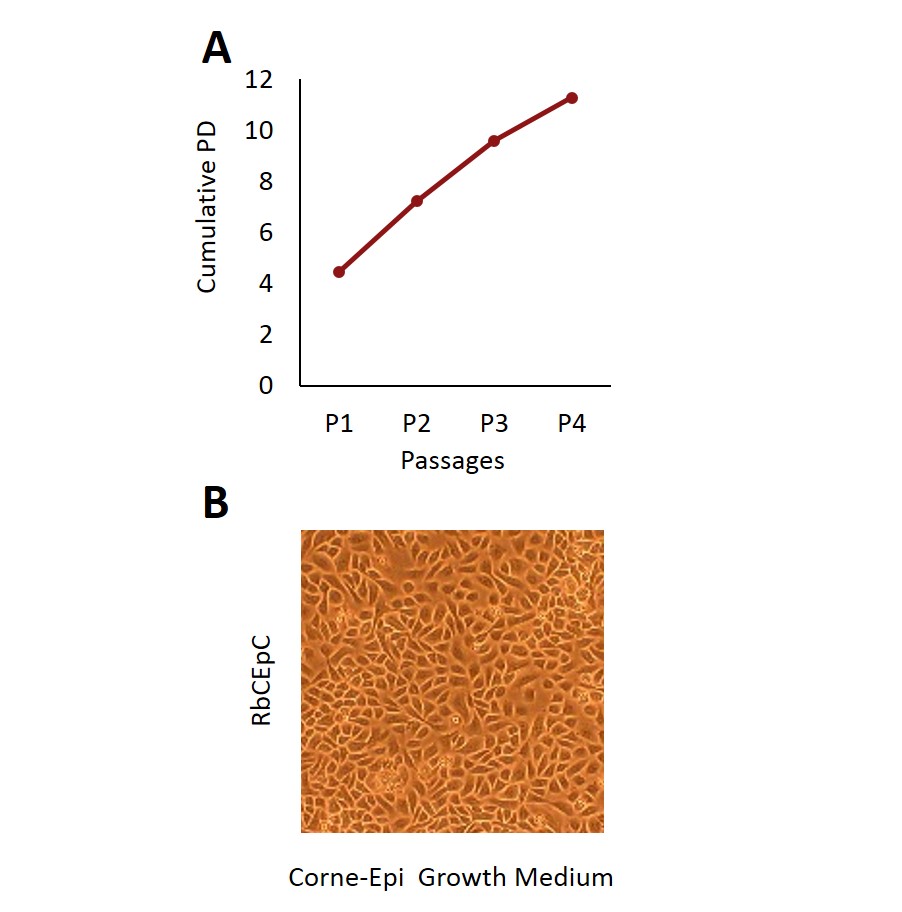
Rabbit Corneal Epithelial Cells (RbCEpC) are isolated from rabbit corneal epithelial tissue, which covers and protects the cornea from bacteria, and other harmful organisms and substances. RbCEpC are cryopreserved at the second passage and be cultured and propagated for at least 14 population doublings.
Recent publications demonstrate the utility of rabbit corneal epithelial cells in basic research and pharmaceutical drug discovery. For example, RbCEpC have been used to study growth factor expression, interaction with stromal cells, and corneal development, homeostasis and pathology. Others employ the cells to assess the effects and safety and cytotoxicity of contact lenses, ophthalmic solutions and even antidepressants. RbCEpC provide a key cellular tool in developing treatments for glaucoma, ocular hypertension, viral infections and keratitis.
RbCEpC
Details
Tissue
Normal healthy rabbit cornea
QC
No bacteria, yeast, fungi, mycoplasma
Bioassay
Attach, spread, proliferate in Growth Med
Cryovial
500,000 RbCEpC frozen Basal Medium w/ 10% FBS, 10% DMSO
Kit
Cryovial frozen RbCEpC, Growth Medium (Rb211-500), Subculture Rgnt Kit (090K)
Proliferating
RbCEpC Shipped in Tsfr Med, psg 1, flasks or plates
Doublings
At least 14
Applications
Laboratory research use only (RUO). Not for human, clinical, diagnostic or veterinary use.
 Powered by Bioz