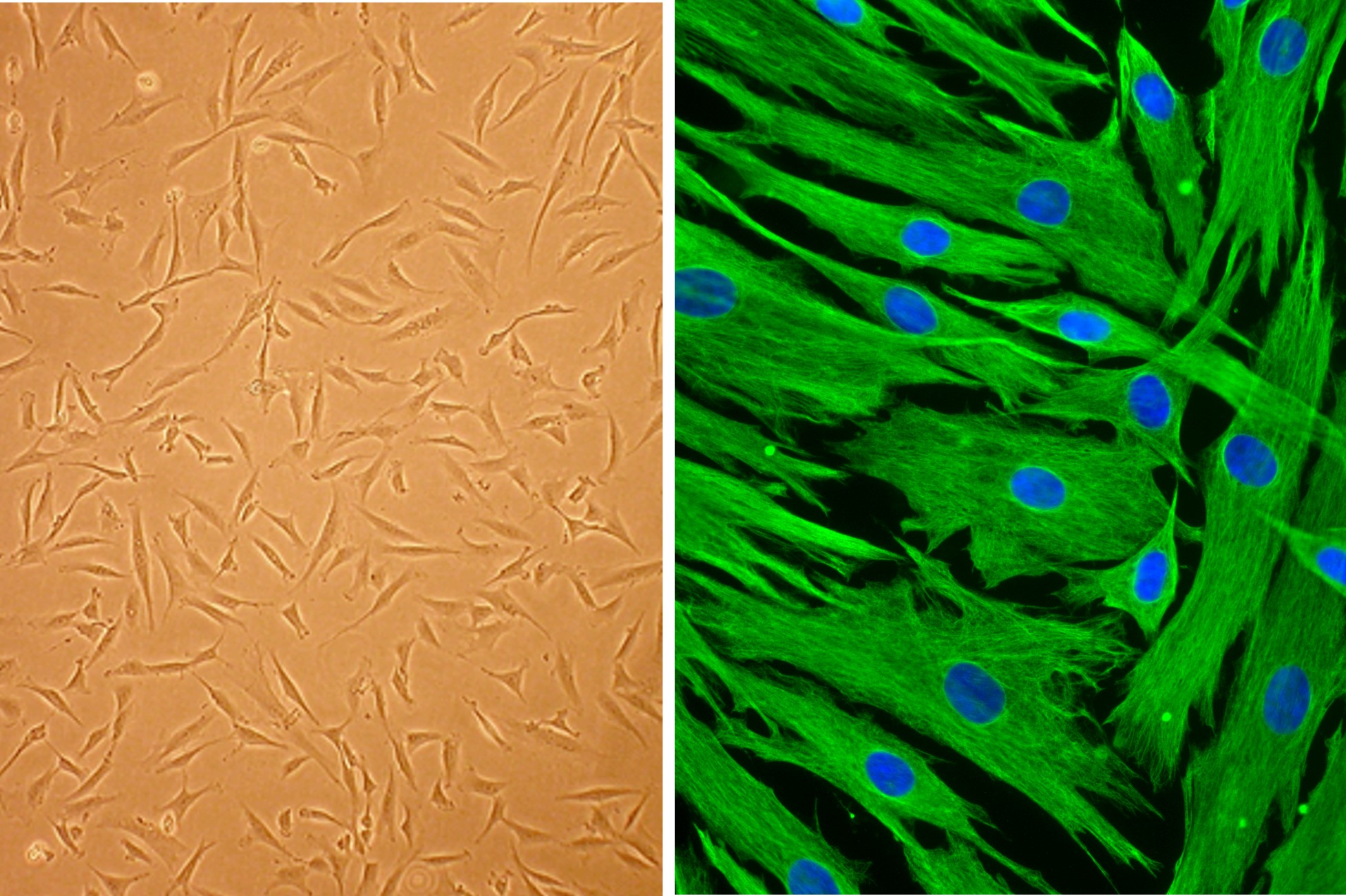
Human Hair Follicle Dermal Papilla Cells: HFDPC
Human Hair Follicle Dermal Papilla Cells (HFDPC) are specialized mesenchymal cell populations isolated from the dermal papillae at the base of human scalp hair follicles.
Description
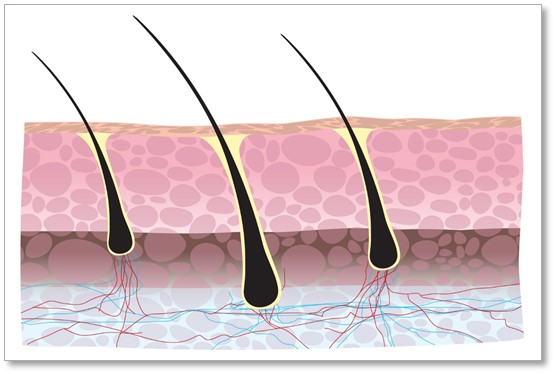
- Hair Cycle and Development: The dermal papilla orchestrates the hair cycle, driving the continuous transition between growth (anagen), regression (catagen), and resting (telogen) phases. These cells are fundamental to hair follicle development and provide the necessary cues for successful hair regeneration.
- Follicular Morphogenesis: During hair follicle morphogenesis, these cells govern the behavior of neighboring matrix cells via complex paracrine signaling, instructing them to proliferate and differentiate. High levels of alkaline phosphatase activity serve as a reliable indicator of their inductive capacity, distinguishing them from standard dermal fibroblasts.
The activity of HFDPC is heavily reliant on the Wnt signaling pathway, which regulates cell cycle components like Cyclin D1 to ensure robust growth during the anagen phase.
- Androgenetic Alopecia: In conditions such as androgenetic alopecia, this signaling network is disrupted. Androgen receptor (AR) expression is notably higher in DP cells derived from balding scalps compared to those from non-balding sites. The binding of androgens (e.g., dihydrotestosterone) to these receptors suppresses Wnt signaling and alters the expression levels of vital growth factors. This leads to progressive follicle miniaturization and compromised hair fiber production.
- Regenerative Research: Because these cells are the primary drivers of hair follicle regeneration, they are increasingly central to tissue engineering pipelines. In these models, HFDPC often interact with hair follicle stem cells to facilitate the formation of new follicular structures.
HFDPC serve as a translationally rigorous human model for investigating follicular biology and screening novel therapeutics.
- Advanced Modeling: By utilizing HFDPC alongside emerging technologies, investigators can explore new pathways for reversing thinning phenotypes.
- Translational Potential: Through the use of advanced molecular biology, researchers are uncovering new ways to sustain the inductive capacity of the dermal papilla. These efforts are paving the way for next-generation treatments that could potentially overcome the limitations of current therapies for hair loss.
Human Hair Follicle Dermal Papilla Cells (HFDPC) are mesenchymal cells isolated from the hair papilla of normal human scalp hair follicles. Hair papilla, in the adult hair follicle, plays a crucial role in the dermal-epidermal interactions that control hair production and events of the hair growth cycle. HFDPC can therefore be used for studying cellular mechanisms organizing the hair follicle, and for the development and evaluation of hair growth products. HFDPC from Cell Applications, Inc. have been used to:
- Demonstrate that IL-1α affects dermal papilla activity by decreasing androgen receptor expression and stimulating secretion of KFG, VEGF, IL-8 and GM-CSF
- Investigate how gene expression and cell proliferation are affected by testosterone analogues, potential hair growth enhancing agents and microbial metabolites
- Study mechanisms of cellular senescence, and developed methodology to extend cellular life span and immortalize the cells by inhibiting p16INK4a and introducing hTERT
- Discover the link between the androgen-induced alopecia and circadian rhythms, mediated by a “clock gene” transcription factor BMAL1
Details
| Tissue | Normal human scalp hair follicle papilla | |
|---|---|---|
| QC | No bacteria, yeast, fungi, mycoplasma, virus | |
| Bioassay | Attach, spread, proliferate in Growth Med | |
| Cryovial | 500,000 HFDPC (2nd passage) in frozen in Basal Medium w/20% FBS & 5% DMSO | |
| Kit | Frzn HFDPC (602-05a), Gr Med (611-500), Subcltr Rgnt Kit (090K), Coll Coated T-75 Flask (125-75), Coll Soln (125-50) | |
| Proliferating | Shipped in Gr Med, 3rd psg (flasks or plates) | |
| Doublings | At least 6 | |
| Applications | Laboratory research use only (RUO). Not for human, clinical, diagnostic or veterinary use. |
Resources
FAQs
Need More Help?
Visit our comprehensive FAQ page for detailed answers to common questions.
Need More Help?
Visit our comprehensive FAQ page for detailed answers to common questions.
Primary Cell FAQs Powered by Bioz