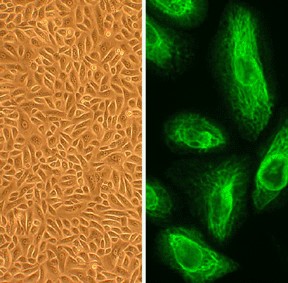
Human Placental Epithelial Cells: HPlEpC
Human Placental Epithelial Cells (HPlEpC) are specialized epithelial cells isolated from the inner epithelial lining of the amniotic membrane.
Description
As the innermost cellular interface of the gestational sac, HPlEpC perform several vital regulatory and protective functions throughout pregnancy:
- Barrier and Immunomodulation: These cells contribute to barrier, antimicrobial, and immunomodulatory functions. They serve as a critical signaling interface that helps maintain the immunological environment of the amniotic fluid.
- Tissue Remodeling: HPlEpC secrete proteases, cytokines, growth factors, and matrix-modifying enzymes that alter extracellular matrix composition and cell-matrix interactions within the amniotic membrane. These secreted factors, which are influenced by the broader signaling environment of placental development, may contribute to progressive membrane weakening by modulating collagen integrity, extracellular matrix turnover, and local inflammatory signaling—biochemical processes that are investigated for their roles in membrane rupture and placental separation at delivery.
- Stem-like Plasticity: Due to their early developmental origin, HPlEpC exhibit stem-like features and demonstrate in vitro multi-lineage differentiation potential. While they share certain markers with embryonic stem cells, they are not functionally equivalent and represent a unique, non-controversial perinatal cell source.
Researchers utilize HPlEpC as a high-fidelity model to study the complex physiology of the fetal membranes and their role in the human placenta:
- Amniotic Physiology: HPlEpC serve as an excellent system for studying the cellular differentiation and homeostatic mechanisms of the fetal membranes under both normal and pathological conditions.
- Toxicology and Drug Discovery: These cells provide a robust human-specific platform for evaluating the safety of pharmaceuticals. They are particularly useful for identifying a potential placental issue or adverse metabolic response that could affect fetal-maternal signaling.
- Comparative Stem Cell Biology: In regenerative medicine, HPlEpC are frequently compared to mesenchymal stem cells from the umbilical cord or placental stroma to evaluate their therapeutic potential for neurogenesis and tissue repair.
- Gestational Complications: By modeling how these placental cells respond to stress, scientists can better understand the cellular triggers behind premature rupture of the membranes and other significant complications of pregnancy.
By balancing their protective barrier roles with significant developmental plasticity, Human Placental Epithelial Cells remain a cornerstone for research into fetal health and regenerative therapy.
Details
| Tissue | Normal healthy human amnion | |
|---|---|---|
| QC | No bacteria, yeast, fungi, mycoplasma, virus | |
| Bioassay | Attach, spread, proliferate in Growth Med | |
| Cryovial | 500,000 HPlEpC (primary culture) frozen in Basal Medium w/ 10% FBS, 10% DMSO | |
| Kit | Cryovial frozen HPlEpC (230-05), Growth Medium (215-500), Subcltr Rgnt Kit (090K) | |
| Proliferating | Shipped in Growth Medium (flasks or plates) | |
| Doublings | At least 6 | |
| Note | HPlEpC proliferate well when thawed, plated from cryopreservation, but not after trypsinization | |
| Applications | Laboratory research use only (RUO). Not for human, clinical, diagnostic or veterinary use. |
Resources
FAQs
Need More Help?
Visit our comprehensive FAQ page for detailed answers to common questions.
Need More Help?
Visit our comprehensive FAQ page for detailed answers to common questions.
Primary Cell FAQs