Rat Cerebellar Astrocytes: RCeA

Rat Cerebellar Astrocytes (RCeA) are primary glial cells derived from rat cerebellar brain tissue.

Quantity

Description

Rat Cerebellar Astrocytes (RCeA) are primary glial cells derived from rat cerebellar brain tissue, serving as an in vitro model for exploring the functional diversity of astrocytes in neuroscience research.

In vivo, astrocytes represent a major cell type in the central nervous system, where they perform critical physiological roles, including providing metabolic support to neurons, removing metabolic waste, participating in signaling mechanisms that can modulate neuronal activity and synaptic function, and interacting with adjacent endothelial cells. As recognition of the active role of glia in health and disease increases, researchers utilize RCeA — alongside comparative models involving mice, other rodents, and human tissues — to study complex neurological processes. These cells are applied in experiments investigating neurodegeneration, neurodegenerative diseases, and the cellular response to brain injury, examining how glial activation and interplay with microglia, oligodendrocytes, and neurons influence cell death and survival.

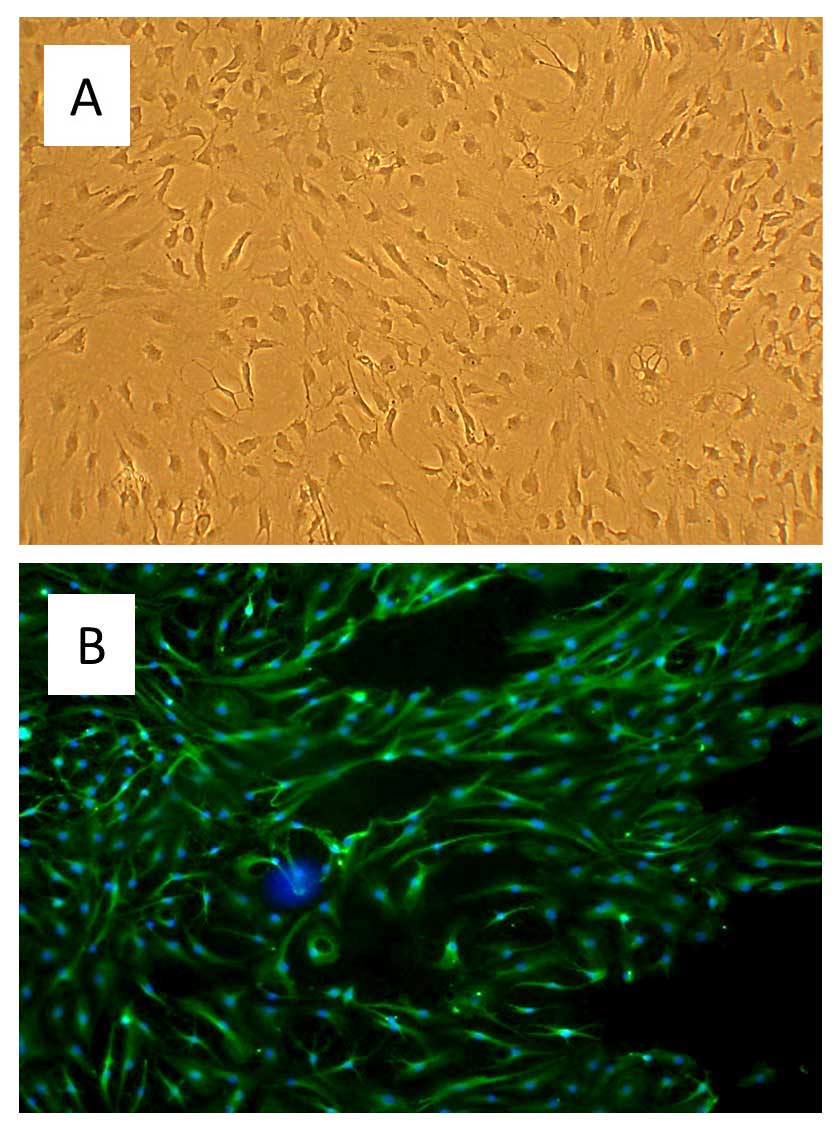
Characterization of RCeA confirms that they stain positive for glial fibrillary acidic protein (GFAP), a hallmark astrocytic marker. Experimental assays may incorporate techniques such as immunofluorescence and nuclear staining with DAPI to visualize protein distribution and cellular architecture, supporting studies in neuroscience and neurobiology.

Rat Cerebellar Astrocytes (RCeA) are derived from rat cerebellum. Astrocytes are the most abundant cells in the central nervous system where they perform many functions, such as providing mechanical support and nutrients to neurons and removal of wastes from neurons; providing signaling to endothelial cells; regulating neurogenesis and controlling synaptic function.

As the recognition of the importance of astrocytes in nervous system is increasing, RCeA serve as a useful in vitro model for exploring the diversity of astrocytes functions.

Characterization:  Stained positive for GFAP (Example image at right shows neonatal Rat Cerebellar Astrocytes: RCeA stained positive for glial fibrillary acidic protein)

Details

Tissue

Normal healthy Rat brain

QC

No bacteria, yeast, fungi, mycoplasma

Cryovial

500,000 RCeA cryopreserved at the zero passage in Freezing Medium containing 10% FBS, 10% DMSO

Character

Positive for GFAP

Bioassay

Attach, spread, proliferate in Growth Medium

Kit

Cryovial frozen RA (R884A-05n), Growth Med (R821-500), Subcltr Rgnt Kit (090K)

Proliferating

Shipped in Gr Med, 3rd psg (flasks or plates)

Doublings

At least 8

Applications

Laboratory research use only (RUO). Not for human, clinical, diagnostic or veterinary use.

Instructions RCeA

Format: PDF

DOWNLOAD NOW
MSDS Cryopreserved Cells

Format: PDF

DOWNLOAD NOW

Resources

MSDS Cryopreserved Cells

Format: PDF

DOWNLOAD NOW
5 Important Cell Culture Rules

Format: PDF

DOWNLOAD NOW
Cell Apps Flyer Nervous System

Format: PDF

DOWNLOAD NOW
Cell Apps Flyer Brain Cells

Format: PDF

DOWNLOAD NOW
Cell Apps Poster Primary Cells

Format: PDF

DOWNLOAD NOW
Cell Applications Inc Brochure

Format: PDF

DOWNLOAD NOW

FAQs