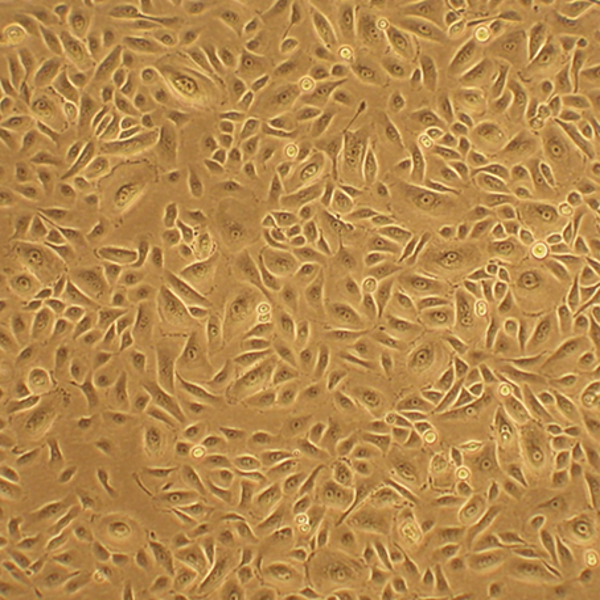
Human Bronchial Epithelial Cells: COPD: HBEpC-COPD

Human Bronchial Epithelial Cells from donors with COPD (HBEpC-COPD) are primary human bronchial epithelial cells from chronic obstructive pulmonary disorder (COPD) patients.

Quantity

Description

Human Bronchial Epithelial Cells from donors with COPD (HBEpC-COPD) — sometimes referred to in scientific literature as primary human bronchial epithelial cells from COPD patients or simply COPD-derived HBEpC (or HBECs) — serve as a sophisticated, patient-derived model for investigating the molecular foundations of chronic obstructive lung disease. Unlike generic cell lines, these primary airway epithelial cells are isolated directly from the human bronchus of COPD patients, preserving the specific epigenetic and transcriptomic signatures associated with the disease. As the primary barrier in the airway, these cells are central to understanding the pathophysiology of emphysema and chronic bronchitis, providing a physiologically relevant system to study the progressive decline in lung function characteristic of this condition.

When cultured at the air-liquid interface (ALI), these surface epithelial cells differentiate into a pseudostratified structure containing functional ciliated cells, mimicking the airway epithelium found in the respiratory tract. This 3D organization allows researchers to study the mechanisms of airway inflammation and the maladaptive repair processes that contribute to the relentless COPD pathogenesis.

HBEpC-COPD provide an essential platform for bridging the gap between bench-side molecular biology and clinical COPD care. By utilizing a specialized epithelial cell growth medium, researchers can maintain the viability of these cells to investigate the cellular responses to lung injury and chronic environmental stressors.

1. Pathogenesis and Shared Inflammatory Pathways

While HBEpC-COPD are indispensable for studying COPD, their utility extends to broader respiratory research. Because of shared inflammatory pathways, these cells are frequently employed to study asthma, idiopathic pulmonary fibrosis (IPF), and various viral respiratory diseases. They are particularly valuable for modeling acute copd exacerbation events; by exposing these cells to inflammatory stimuli, cytokines, or viral pathogens, investigators can observe the specific inflammation signaling cascades that drive acute decline and hinder normal tissue repair.

2. Translational Medicine

The use of patient-derived primary cells aligns with the rigorous standards promoted by organizations like the American Thoracic Society and the COPD Foundation. While standard treatments—ranging from oxygen therapy to pulmonary rehabilitation—focus on managing COPD symptoms, HBEpC-COPD allow researchers to explore potential regenerative therapies. By studying stem cells within the bronchial niches, scientists are working toward interventions that could reverse damage. Furthermore, these cells serve as vital comparative controls in studies of conditions like cystic fibrosis, helping to differentiate the cellular mechanisms driving airway obstruction from other genetic mucosal defects.

The clinical utility of these human bronchial epithelial cell models spans the spectrum of critical care and critical care medicine. Researchers leverage these cells to:

  • Examine Gene Expression: Track the activation of kinases and signaling pathways influenced by pro-inflammatory molecules that characterize the chronic obstructive lung disease microenvironment.
  • Assess Barrier Integrity: Measure changes in epithelial permeability and cell surface adhesion molecules that are compromised in patients with advanced lung disease.
  • Support Drug Discovery: Act as a critical validation step for high-throughput screening, ensuring that compounds designed to suppress inflammation or enhance cell repair are effective in human-derived tissues.
By providing a platform to study the interaction between environment, genetics, and cellular lifespan, HBEpC-COPD remain an indispensable tool for researchers aiming to improve outcomes for patients who currently rely on long-term management and palliative care.

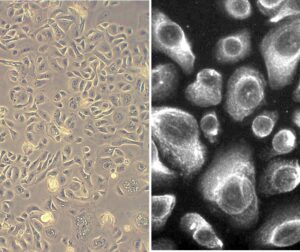
Human Bronchial Epithelial Cells (HBEpC) provide an excellent model system to study all aspects of epithelial function and disease, particularly those related to airway viral infections, as well as tissue repair mechanisms, signaling changes and potential treatments relevant to lung injuries, mechanical and oxidative stress, inflammation, pulmonary diseases and smoking. When grown on inserts and provided with the liquid/air interface, HBEpC can differentiate into a pseudostriated epithelium and serve as a more physiological 3D tissue model for in vitro studies. The HBEpC shown here were cultured (L) and immunolabeled for cytokeratin 18 (R).
HBEpC
HBEpC

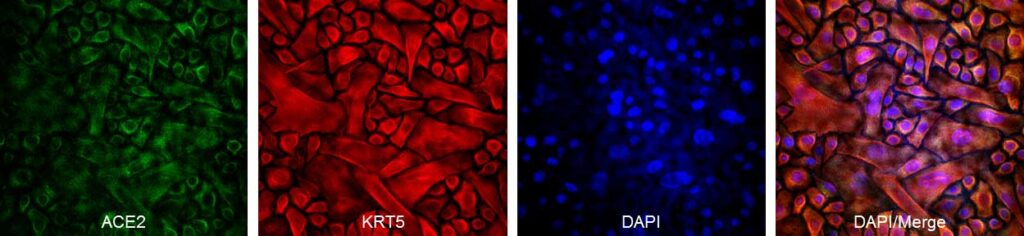
Below, HBEpC from Cell Applications are stained with ACE2 and KRT5. Ongoing research suggests ACE2 is the cellular receptor utilized by SARS-CoV-2, the coronavirus that causes COVID-19, for cell entry.

HBEpC ACE2 KRT5 staining CAI-UCSD 200504 Das v2
HBEpC from Cell Applications, Inc. have been used to examine:

  • Activation, expression and production of genes, kinases and signaling pathways by cytokines, growth factors, interleukins, binding proteins and pro-inflammatory molecules.
  • Stimulation-dependent, observable changes in proliferation, bronchial epithelial permeability, crosslinking of membrane glycoproteins and cell surface adhesion molecules.  Drug discovery cell screening for in vitro assay of compounds, or to extend and confirm high-throughput work done in cell lines.
  • Clinical focused discoveries leveraging HBEpC include therapeutics to suppress tumor gene transcription, apoptosis, inflammation, auto-immune disease and viral infection, while enhancing cell protection, repair and lifespan.
Characterization: Morphology consistent with epithelial origin, and positive for epithelial cell marker cytokeratin 18

For making strides in Chronic Obstructive Pulmonary Disease, researchers and pharmaceutical discovery companies rely on primary cells isolated from patients with COPD. In this chronic disease, genetic, environmental and lifestyle factors cause the lungs and airways to deliver long-term poor air flow. The symptoms include shortness of breath, and can be life-threatening at late stages.

Details

Tissue Human bronchial epithelium: COPD
QC No bacteria, yeast, fungi, mycoplasma, virus
Bioassay Attach, spread, proliferate in Growth Med
Cryovial 500,000 HBEpC-COPD (1st passage) frozen in Basal Med w/ 10% FBS, 10% DMSO
Kit Cryovial frozen HBEpC-COPD (502COPD-05a), Gr Med (511-500), Subculture Rgnt Kit (090K)
Proliferating Shipped in Gr Med, 3rd psg (flasks or plates)
Doublings At least 16
Applications Laboratory research use only (RUO). Not for human, clinical, diagnostic or veterinary use.
Instructions HBEpC CoPD

Format: PDF

DOWNLOAD NOW
MSDS Cryopreserved Cells

Format: PDF

DOWNLOAD NOW

Resources

Cell Apps Flyer Epithelial Cells

Format: PDF

DOWNLOAD NOW
5 Important Cell Culture Rules

Format: PDF

DOWNLOAD NOW
Cell Apps Poster Primary Cells

Format: PDF

DOWNLOAD NOW
Cell Applications Inc Brochure

Format: PDF

DOWNLOAD NOW

FAQs

Extended Products

PRODUCTSIZECAT.#PRICEQUANTITY
Subculture Reagent Kit: 100 ml each of HBSS, Trypsin/EDTA & Trypsin Neutralizing Solution1 Kit, 100 ml090K$73.00
Bronchial Epithelial Cell RNA (HBEpC RNA), Adult: Total RNA prepared from Human Bronchial Epithelial Cells, adult10 ug502-R10a$418.00
Bronchial Epithelial Cell RNA (HBEpC RNA), Adult: Total RNA prepared from Human Bronchial Epithelial Cells, adult25 ug502-R25a$836.00
Human Lung RNA: Total RNA prepared from human lung tissue50 ug1H40-50$240.00
Human Lung RNA: Total RNA prepared from human lung tissue250 ug1H40-250$894.00
Monoclonal IL-1 Receptor Antagonist Antibody: Monoclonal IL-1 Receptor Antagonist Antibody100 ulCB19846$302.00
Human IL-1 alpha ELISA Kit: Human Interleukin-1 alpha ELISA Kit96 wellsCL0389$506.00
Human IL-1 beta ELISA Kit: Human Interleukin-1 beta ELISA Kit96 wellsCL0392$587.00
Cytofect Epithelial Cell Transfection Kit (124 x 24-Wells): 124 x 24-Well Rxns1 KitTF102K$538.00
Freezing Medium: For general cryopreservation of most primary cells. Contains FBS & DMSO.50 ml040-50$57.00
Human Epidermal Growth Factor (EGF): Human Epidermal Growth Factor100 ugRP1026-100$86.00
Human Epidermal Growth Factor (EGF): Human Epidermal Growth Factor500 ugRP1026-500$194.00
Human Epidermal Growth Factor (EGF): Human Epidermal Growth Factor1000 ugRP1026-1000$264.00
Human Interleukin-1-Alpha (IL-1 alpha): Human Interleukin-1-alpha10 ugRP1173-10$194.00
Human Interleukin-1-Alpha (IL-1 alpha): Human Interleukin-1-alpha100 ugRP1173-100$624.00
Human Interleukin-1-Alpha (IL-1 alpha): Human Interleukin-1-alpha1000 ugRP1173-1000$5,327.00
3-D Airway Model (Not available for international orders): HBEpC differentiated into pseudostriated epithelium on PCF sitting inserts. Available only in the US. Approximate turnaround time 4-6 weeks. *Shipment will be coordinated with Customer Support team.12 Sitting Inserts502-3D-12$848.00
Cytofect Epithelial Cell Transfection Sample Kit (25 x 24-Wells): 25 x 24-Well Rxns1 Sample KitTF102KS$72.00
3-D Airway Model: Cells, Media, Reagents & Inserts (See Details tab for specifics)1 Kit502K-3D$769.00
3-D Airway Model (Not available for international orders): HBEpC differentiated into pseudostriated epithelium on PCF sitting inserts. Available only in the US. Approximate turnaround time 4-6 weeks. *Shipment will be coordinated with Customer Support team.24 Sitting Inserts502-3D-24$1,494.00
Human EGF, Animal-Free: Human Epidermal Growth Factor, Animal-Free100 ugRP1026AF-100$95.00
Human EGF, Animal-Free: Human Epidermal Growth Factor, Animal-Free500 ugRP1026AF-500$213.00
Human EGF, Animal-Free: Human Epidermal Growth Factor, Animal-Free1000 ugRP1026AF-1000$290.00
Size: 50 ugCat.#: 1H40-50Price: $240.00
Size: 250 ugCat.#: 1H40-250Price: $894.00
Size: 96 wellsCat.#: CL0389Price: $506.00
Size: 96 wellsCat.#: CL0392Price: $587.00
Size: 1 KitCat.#: TF102KPrice: $538.00
Size: 100 ugCat.#: RP1026-100Price: $86.00
Size: 500 ugCat.#: RP1026-500Price: $194.00
Size: 1000 ugCat.#: RP1026-1000Price: $264.00
Size: 10 ugCat.#: RP1173-10Price: $194.00
Size: 100 ugCat.#: RP1173-100Price: $624.00
Size: 1000 ugCat.#: RP1173-1000Price: $5,327.00
Size: 1 Sample KitCat.#: TF102KSPrice: $72.00
Size: 100 ugCat.#: RP1026AF-100Price: $95.00
Size: 500 ugCat.#: RP1026AF-500Price: $213.00
Size: 1000 ugCat.#: RP1026AF-1000Price: $290.00