Bone
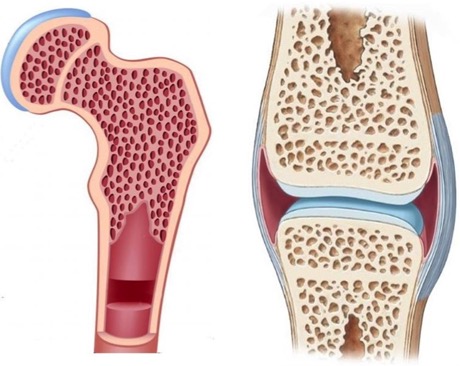
Bone is a highly dense, specialized connective tissue that forms the structural framework of the skeletal system. Beyond its mechanical role in support, locomotion, and soft-tissue protection, bone serves as a dynamic metabolic organ essential for mineral homeostasis (calcium and phosphate storage) and acts as the primary site for adult hematopoiesis. Rather than occurring uniformly throughout the medullary cavity, hematopoiesis is highly compartmentalized within specialized marrow microenvironments, principally organized into the endosteal niche (adjacent to the inner bone surface) and the vascular niche (lining the marrow sinusoids).
Because the intact skeletal matrix presents significant processing challenges and structural complexity in vitro, contemporary orthopedic and hematological research leverages a coordinated matrix of primary cell types. These include bone-forming parenchymal lines like Human Osteoblasts (HOb), multipotent stromal reservoirs like Human Mesenchymal Stem Cells from Bone Marrow (HMSC-BM), and total medullary fractions like Human Mononuclear Cells from Bone Marrow (HMNC-BM).
By utilizing these human primary lineages alongside complementary animal models—such as Canine Osteoblasts (CnOb), Rat Osteoblasts (ROb), and Rat Mesenchymal Stem Cells (RMSC)—investigators can model bone remodeling, evaluate implant osseointegration, map arthritic pathologies, and screen novel therapeutic compounds against a physiologically relevant cellular background.
