Cardiac
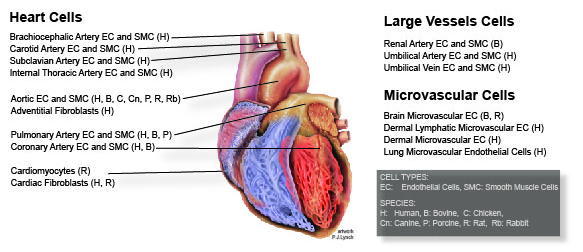
Cardiac and cardiovascular tissue frameworks represent an extraordinary cellular network engineered to sustain continuous mechanical pumping, maintain localized vessel tone, and regulate systemic perfusion. Far from being a homogeneous muscle block, the cardiac microenvironment is a complex multicellular landscape comprising dozens of transcriptionally and functionally distinct cell populations partitioned across the endocardium, myocardium, epicardium, and specialized valvular compartments.
To model this structural and mechanical complexity in vitro, contemporary cardiovascular research utilizes a highly integrated grid of primary parenchymal and stromal cells alongside human induced pluripotent stem cell (HiPSC)-derived lineages. This matrix spans specialized organ-specific cells — such as Rat Cardiomyocytes (RCm), Human Cardiac Fibroblasts (HCF), Human Pericardial Fibroblasts (HPcF), and Porcine Cardiac Valve Interstitial Cells (PCVIC) — paired with regional macrovascular and microvascular components.
These vascular lines encompass endothelial cells (EC) and smooth muscle cells (SMC) isolated from the aortic, coronary, carotid, brachiocephalic, femoral, renal, and pulmonary arteries, as well as specialized microvascular niches from the brain, lung, dermis, and lymphatic networks.
Backed by disease-specific isolates (Type 2 Diabetes, Asthma, and Atherosclerotic Plaque) and pre-screened signaling cell lots, these primary and HiPSC-derived platforms significantly reduce many of the oncogenic artifacts and altered signaling kinetics typical of immortalized lines.
