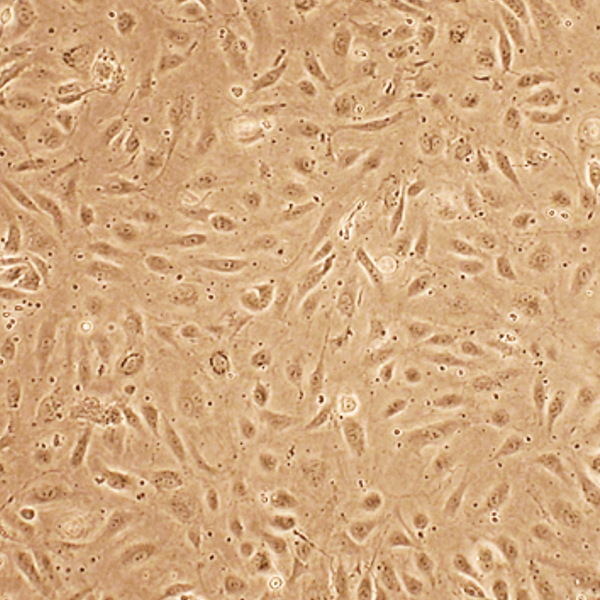
Human Coronary Artery Endothelial Cells: HCAEC (A). HCAEC stained with DiI-Ac-LDL, the acetylated apoprotein specifically recognized & endocytosed by endothelial cells (B). HCAEC transfected with GFP plasmid DNA using Cytofect™ Endothelial Cell Transfection Kit (C&D).
Human Coronary Artery Endothelial Cells: Asthma HCAEC-AS
Human Coronary Artery Endothelial Cells-Asthma (HCAEC-AS) are macrovascular endothelial cells isolated from the coronary arteries of patients clinically diagnosed with asthma.
Description
Human Coronary Artery Endothelial Cells-Asthma (HCAEC-AS) are macrovascular endothelial cells isolated from the coronary arteries of patients clinically diagnosed with asthma. These HCAEC cells exhibit a standard cobblestone morphology and express pan-endothelial markers, including CD31 (PECAM-1) and von Willebrand factor (vWF). As diverse primary cells, they provide a specialized in vitro model to investigate the systemic cardiovascular comorbidities associated with chronic airway inflammation. Researchers utilize these cells to explore the mechanisms linking respiratory allergies — such as allergic asthma — to coronary endothelial changes and the cellular cross-talk driving vascular inflammatory remodeling.
Asthma is a chronic inflammatory disorder characterized by airway hyperresponsiveness, airway wall thickening, and remodeling.
- Systemic Inflammatory Links: While asthmatic airways are defined by localized responses, systemic inflammatory mediators (e.g., IL-6, TNF-α) in severe disease can impact the coronary endothelium, potentially affecting coronary blood flow and contributing to cardiovascular disease.
- Disease Comparisons: The systemic profile of asthmatic patients is distinct from other conditions like chronic obstructive pulmonary disease, though both require careful management of asthma medications to prevent deleterious effects on the vasculature.
HCAEC-AS cells serve as a platform for studying how the coronary endothelium responds to biochemical stress and inflammatory signals.
- Adhesion and Migration: Under conditions of inflammation, the endothelium upregulates adhesion molecules (VCAM-1, ICAM-1) to facilitate leukocyte recruitment, a process often accelerated in asthmatics.
- Angiogenic Regulation: These cells are also utilized to study angiogenesis and the expression of angiogenic factors within the coronary vasculature. Alterations in these pathways may be relevant when assessing the risk of secondary conditions, including heart failure.
- Mechanistic Pathways: While pathways like IgE-mediated signaling and exosomal communication are often studied in the context of pulmonary symptoms, they also represent potential drivers of endothelial dysfunction in asthma patients. Notably, these models are distinct from other unrelated pathological contexts, such as hepatitis B research.
Because of the intersecting pathways between pulmonary and vascular health, HCAEC-AS models are integral to pharmaceutical development and preclinical screening.
- Therapeutic Profiling: Researchers utilize HCAEC-AS lots to evaluate whether novel anti-asthmatic compounds, leukotriene modifiers, or biologic therapies exert beneficial or neutral effects on the macrovasculature.
- Advanced Modeling: To capture the physiological environment of the coronary artery, HCAEC-AS cells are increasingly used in 3D endothelialized engineered tissues and microfluidic blood-vessel-on-a-chip configurations. These platforms allow for the study of how endothelial cells respond to fluid shear stress and interact with surrounding components, such as those found in the airway smooth muscle niche, under controlled conditions.
Human Coronary Artery Endothelial Cells (HCAEC) from Cell Applications, Inc. provide an excellent model system to study all aspects of cardiovascular function and disease, and they have been utilized in dozens of research publications, for example to:
- Understand the mechanism of the anti-inflammatory properties of HDL, and demonstrate for the first time that mature miRNA can control gene expression in a cell where it is neither transcribed nor processed
- Study mechanisms of angiogenesis, as well as oxidative stress and inflammation related pathways in endothelia, including gender and race specific differences in patients with peripheral artery disease
- Elucidate molecular mechanisms of various cardiovascular risk factors, including those associated with diabetes
- Understand the mode of action and cardiovascular protection effects of various natural compounds, vitamins and drug candidates
- Develop and evaluate scaffolds and hydrogels for cardiac tissue engineering, and new treatment strategies to prevent stent restenosis
- Compare effects of BMP-4 on HCAEC and Human Pulmonary Artery Endothelial Cells (HPAEC, also from Cell Applications, Inc.)
- Show that only in HCAEC BMP-4 treatment induced ROS, activated NF-kB, ICAM-1 and increased monocyte adhesiveness, explaining why its upregulation leads to atherosclerosis and hypertension in the systemic, but not pulmonary circulation
Additionally, HCAEC, along with human aortic (HAOEC), carotid artery (HCtAEC), subclavian artery (HScAEC) and brachiocephalic artery (HBcAEC), all provided by Cell Applications, Inc., have been used to demonstrate that not only blood vessels from different tissues are highly heterogeneous, they also interact differently with leukocytes during the inflammation response. The authors further showed that differential N-glycosylation of commonly expressed vascular adhesion molecules may be responsible for this heterogeneity, as well as for modulation of signaling under resting and activated inflammatory conditions. This also explains why specific vascular beds may be more or less susceptible to particular diseases or stimuli. Importantly, if cells from different sources were used, these results could not be convincingly validated due to a number of uncontrolled variables, such as age, race, genetic variability or life style choices of the donors. To eliminate the donor-to-donor variability, the scientists took advantage of the great variety of primary cells offered by Cell Applications, including the option of ordering a panel of endothelial cells obtained from different vascular beds of the same donor!
Because of the complex heterogeneity that exists not only between different donors, but even between different vascular beds in the same individual, it would be prudent to confirm any new findings on primary cell lots coming from several different origins.
Cell Applications offers a wide panel of cells for use in asthma research and airway drug development, such as Bronchial & Tracheal Epithelial Cells, Pulmonary & Lung Microvascular Endothelial cells and others. Multiple donor profiles and lots are available. Asthma (AS) is a chronic disease that inflames and narrows air passageways in the lungs. This airflow obstruction, which can flare up at any time, causes shortness of breath and can be life-threating in severe cases. Asthma often starts during childhood, and while there’s no cure, scientists and pharmaceutical companies have made strides in understanding, treating and managing the disease.
Details
| Tissue | Human coronary artery from donor with asthma | |
|---|---|---|
| QC | No bacteria, yeast, fungi, mycoplasma, virus | |
| Character | Factor VIII-related Ag, DiI-Ac-LDL uptake | |
| Bioassay | Attach, spread, proliferate in Growth Med | |
| Cryovial | 500,000 HCAEC-AS (2nd passage) frozen in Basal Medium w/ 10% FBS, 10% DMSO | |
| Kit | Cryovial frozen HCAEC-AS (300AS-05a), Growth Med (212-500), Subculture Rgnt Kit (090K) | |
| Proliferating | Shipped in Gr Med, 3rd psg (flasks or plates) | |
| Doublings | At least 15 | |
| Applications | Laboratory research use only (RUO). Not for human, clinical, diagnostic or veterinary use. |
Resources
FAQs
Need More Help?
Visit our comprehensive FAQ page for detailed answers to common questions.
Need More Help?
Visit our comprehensive FAQ page for detailed answers to common questions.
Primary Cell FAQs