Human Neural Stem Cells, Neurospheres: HNSC-3D
Human Neural Stem Cells, Neurospheres (HNSC-3D) are multipotent neuroepithelial cells isolated from specific cortical subregions of a single human donor cryopreserved at first passage as neurospheres.
Description
Human Neural Stem Cells, Neurospheres (HNSC-3D) — also studied under specific neural progenitor or neural progenitor cell designations — are multipotent neuroepithelial cells isolated from specific cortical subregions of a single human donor. While often referred to collectively as a neural stem cell population, investigators should note that neurosphere cultures are highly heterogeneous, typically consisting of a dynamic mix of true, self-renewing neural stem cells and more lineage-restricted progenitor cells. Propagated as floating, three-dimensional (3D) spherical aggregates, this cell type mitigates some structural limitations of flat monolayers by preserving native spatial microenvironments. However, this 3D culture format introduces its own technical challenges, such as nutrient diffusion gradients, localized hypoxia in inner cores, and variability in sphere size, all of which can affect experimental reproducibility.
In the human brain, endogenous neural stem and progenitor cells reside within highly specialized anatomical niches. These are primarily located in the subgranular zone (SGZ) of the hippocampal dentate gyrus and the subventricular zone (SVZ) adjacent to the lateral ventricles. These niches orchestrate embryonic development, govern adult neural development, and maintain neural plasticity. In commercial and academic research, the regional identity of the donor tissue (such as the frontal, temporal, or occipital cortex) and donor age (fetal versus adult) are crucial variables. These parameters heavily influence neural progenitor potency, baseline proliferation kinetics, and downstream lineage bias.
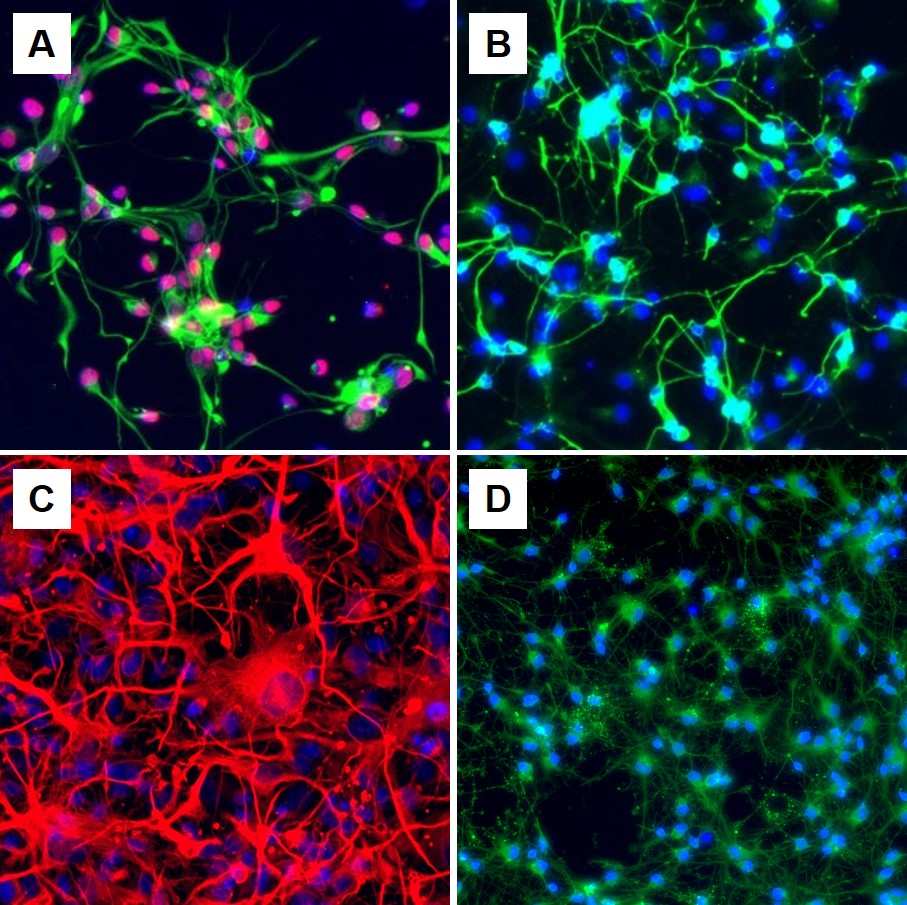
The primary biological function of these multipotent cell populations is to expand and differentiate into the principal cellular phenotypes of the central nervous system. In a living tissue niche, this can involve complex modes of asymmetric and symmetric division. However, during in vitro neurosphere expansion, proliferation is frequently driven by symmetric division and specific culture selection biases. When the neurosphere assay is transitioned into lineage-specific induction media, the progenitors exit the cell cycle and initiate targeted neuronal differentiation. This process yields functional neurons, which can be further specified into specialized subtypes, such as tyrosine hydroxylase-positive dopaminergic neurons. Alternatively, they can differentiate into macroglial lineages, producing specialized glial cells like astrocytes and myelinating oligodendrocytes.
In laboratory settings, HNSC-3D models serve as translationally rigorous vitro models for exploring neurogenesis, modeling a specific neurological disorder, and validating advanced pipelines in regenerative medicine. Researchers widely utilize these neurospheres to study cellular responses to acute ischemic stroke, demyelinating conditions, and progressive neurodegenerative disease states like parkinsons disease. For instance, investigators leverage the 3D model to explore how endogenous or transplanted progenitors can be stimulated to repair damaged adult brain tissue.
Additionally, because these cells natively respond to chemoattractant gradients, they are used to model how neural progenitors migrate toward an invading brain tumor, such as glioblastoma. Beyond primary tissue modeling, fully characterized HNSC-3D cultures serve as a vital somatic benchmark to evaluate the safety, efficiency, and differentiation kinetics of neural induction protocols utilizing human embryonic or induced pluripotent stem cells.
Details
| Tissue |
| |
|---|---|---|
| QC | No bacteria, yeast, fungi, mycoplasma, virus | |
| Cryovial | 2,000,000 HNSC (1st psg) cryopreserved in Freezing Med (040-50) | |
| Kit | Cryovial frozen HNSC (HS820-f), Growth Medium (813-250), Neural Stem Cell Dissociation Solution (076-20), 10cm non-TC dish x2 | |
| Proliferating | N/A | |
| Doublings | N/A | |
| Applications | Laboratory research use only (RUO). Not for human, clinical, diagnostic or veterinary use. |
Resources
FAQs
Need More Help?
Visit our comprehensive FAQ page for detailed answers to common questions.
Need More Help?
Visit our comprehensive FAQ page for detailed answers to common questions.
Primary Cell FAQs Powered by Bioz