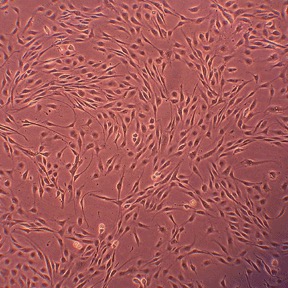
Canine Aortic Endothelial Cells: CnAOEC
Canine Aortic Endothelial Cells (CnAOEC) are canine primary cells isolated from the inner lining (tunica intima) of the thoracic or abdominal aorta of the dog (Canis lupus familiaris).
Description
Canine Aortic Endothelial Cells (CnAOEC) are canine primary cells isolated from the inner lining (tunica intima) of the thoracic or abdominal aorta of the dog (Canis lupus familiaris). As a fundamental vascular cell type, these cells form a flat, contact-inhibited monolayer that directly experiences high pulsatile pressures and functions to transduce laminar fluid shear stress into biochemically protective, antithrombotic signals. While mechanical resilience against arterial pressure is a structural property of the entire vessel wall (integrating the endothelium, tunica media, and adventitia), the endothelium serves as the essential mechanosensitive transducer.
Unlike a transformed continuous cell line, primary vascular endothelial cells like CnAOEC maintain key native characteristics, such as the expression of von Willebrand factor (vWF), which carries and stabilizes factor VIII. Quality control validation of these diverse primary cells includes verifying the uptake of acetylated low-density lipoprotein (Ac-LDL). Testing ensures cultures are free of contaminants like mycoplasma and relevant pathogens.
In the living organism, this cell type forms the continuous macrovascular inner lining of the aorta, the largest arterial vessel in the body. Situated at the interface between the circulating blood and the vascular wall, the aortic endothelium rests upon a specialized basement membrane, directly overlying the internal elastic lamina and the smooth muscle layers of the tunica media. While multipotent mesenchymal stem cells can home to areas of vascular injury to assist in tissue remodeling, resident CnAOEC are the primary cells responsible for maintaining daily luminal homeostasis.
The primary biological function of CnAOEC is to act as a semi-permeable physical, metabolic, and immunoregulatory barrier, regulating macromolecular transport and governing vessel tone. In health, these cells utilize endothelial nitric oxide synthase (eNOS) to produce nitric oxide (NO), a key signaling molecule that drives vascular smooth muscle relaxation (vasodilation) and suppresses inappropriate platelet aggregation and leukocyte adhesion.
However, chronic mechanical stress, metabolic overload, or systemic pathogens disrupt this homeostatic signaling, precipitating endothelial dysfunction. Unlike microvascular networks — where localized endothelial barrier breakdown in specific tissues can lead to localized edema, such as a drop in corneal endothelial function causing a rise in corneal thickness and subsequent corneal edema (often monitored in clinical veterinary medicine via optical coherence tomography) — macrovascular dysfunction in the aorta alters systemic disease progression. Endothelial dysfunction increases paracellular permeability and triggers the upregulation of cellular adhesion molecules (such as ICAM-1 and VCAM-1). This allows circulating low-density lipoproteins (LDLs) and inflammatory cells to penetrate the subendothelial space, where localized oxidative stress promotes LDL oxidation and initiates early atherogenic remodeling.
In cell biologics, molecular biology, and comparative medicine, CnAOEC serve as an invaluable cross-species bridge. Researchers frequently compare their responses to human aortic endothelial cells (HAOEC) to discover novel disease treatments for both veterinary patients and human clinical medicine. However, investigators must carefully account for critical interspecies differences in receptor expression profiles, fluid shear responses, and baseline drug sensitivity. This comparative design is highly relevant because domestic dogs spontaneously develop complex cardiovascular disorders and aggressive endothelial-origin malignancies, such as hemangiosarcoma (HSA) — which mirrors human angiosarcoma, though researchers must account for the heterogeneous nature of these tumors.
Investigators deploy CnAOEC to map the dysregulated pathways driving vascular oncogenesis, examine systemic inflammatory biomarkers during simulated sepsis kinetics, and unpack the severe vascular complications of heartworm endarteritis. To comprehensively map endothelial behavior and evaluate protective anti-inflammatory or vasoprotective agents, researchers utilize a multi-faceted panel of in vitro assays. These workflows routinely incorporate shear stress perfusion systems, tube-formation assays, barrier integrity assessments (tracking transepithelial electrical resistance [TEER] or macromolecular permeability flux), real-time measurements of NO release and intracellular reactive oxygen species (ROS) spikes, and quantitative tracking of inflammatory cytokine release and cellular apoptosis.
Canine Aortic Endothelial Cells (CnAOEC) from Cell Applications, Inc. provide a useful model to study cardiovascular diseases and test potential therapeutic agents, not only important from a veterinary perspective, but also having implications for human health. CnAOEC have been used in numerous research publications, for instance to: Adapt an immunomagnetic isolation protocol used in human patients to isolate circulating endothelial cells in dogs Investigate the mechanism of N-terminal portion of pro C-type natriuretic peptide (NT-pCNP), a sepsis biomarker in humans and dogs Demonstrate vasoprotective activity of pomegranate and soy isoflavons in order to prevent cardiovascular disease-related endothelial disfunction in dogs Compare growth of normal canine endothelial cells and aggressive canine hemangiosarcoma cells in a study investigating signaling pathways underlying hemangiosarcoma oncogenesis Understand reasons for reduced numbers of circulating progenitor cells in cardiovascular disease
Details
| Tissue | Normal healthy Canine aorta | |
|---|---|---|
| QC | No bacteria, yeast, fungi, mycoplasma | |
| Character | DiI-Ac-LDL uptake: Positive | |
| Bioassay | Attach, spread, proliferate in Growth Med | |
| Cryovial | 500,000 cells (2nd passage) frozen in Basal Medium w/ 10% FBS, 10% DMSO | |
| Kit | Cryovial frozen CnAOEC (Cn304-05), Growth Medium (Cn211-500), Subculture Rgnt Kit (090K), Attchmnt Fctr Soln (123-100) | |
| Proliferating | Shipped in Gr Med, 3rd psg (flasks or plates) | |
| Doublings | At least 16 | |
| Applications | Laboratory research use only (RUO). Not for human, clinical, diagnostic or veterinary use. |
Resources
FAQs
Need More Help?
Visit our comprehensive FAQ page for detailed answers to common questions.
Need More Help?
Visit our comprehensive FAQ page for detailed answers to common questions.
Primary Cell FAQs Powered by Bioz