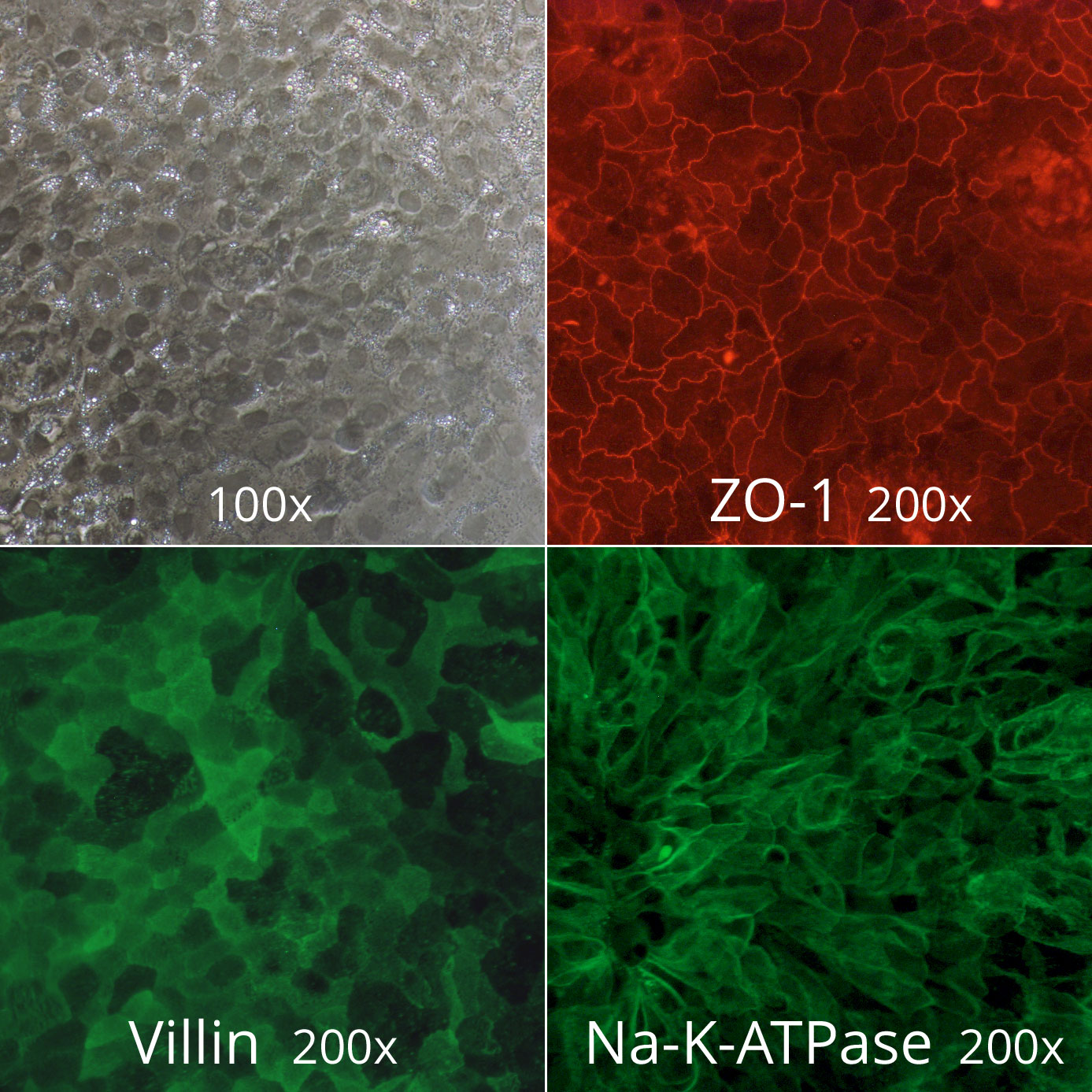
Crohn’s Disease Gastrointestinal Epithelial Cells, Treated (HIlEpC-CD-T): phase contrast 100x, immunostained for ZO-1 (red), Villin (green) and Na-K-ATPase (green), 200x.
Crohn’s Disease Gastrointestinal Epithelial Cells, Treated
Crohn’s Disease Gastrointestinal Epithelial Cells, Treated, are specialized primary epithelial cells from the intestinal epithelium derived from patients with established inflammatory bowel disease who have undergone medical interventions.
Description
Crohn’s Disease Gastrointestinal Epithelial Cells, Treated, are specialized primary epithelial cells derived from patients with established inflammatory bowel disease who have undergone medical interventions. These cells provide a critical in vitro model for studying the complex pathophysiology, treatment refractoriness, and progressive phenotypes of chronic gastrointestinal disorders.
In vivo, Crohn’s disease progression often leads to complicated disease behaviors, including stricturing (B2) and penetrating (B3) phenotypes. To manage chronic inflammation, patients are frequently treated with anti-inflammatory therapeutics, such as corticosteroids and immunosuppressants like anti-TNF medications, aimed at modulating the aberrant immune response within the gastrointestinal tract. However, despite medical treatment, disease management remains challenging; a substantial proportion of patients experience primary non-response or lose response to therapy over time. To investigate these clinical challenges, researchers can utilize Cell Applications’ comprehensive epithelial cell biobank encompassing treated and untreated (naive) categories from various anatomical locations — including the colon, ileum, and rectum — spanning diverse disease ages and behaviors.
By analyzing these treated gastrointestinal epithelial cells alongside clinical data regarding prior therapies, researchers can better understand how prolonged immune activation, medication exposure, and mucosal healing failure influence cellular behavior, epithelial barrier integrity, and ongoing tissue inflammation in inflammatory bowel disease.
Crohn’s Disease progression can lead to complications such as structuring (B2) and penetrating (B3) behaviors. In addition to Naive/Unreated Crohn’s Disease Gastrointestinal Cells, the Cell Applications IBD epithelial cell biobank covers later stages of Crohn’s Disease. Most B2 and B3 patients have been treated with anti-inflammatory steroids and immunosuppressants (anti-TNF medication) to slow progression of disease. Despite medication, many patients continue to struggle, and disease management remains challenging. Only about one-fifth of patients are in remission a year after diagnosis. More than one-third of patients with IBD fail induction therapy, and up to 60 percent of primary responders lose response to medication over time.
To better understand Crohn’s Disease progression, treatment, and refraction, Cell Applications offers researchers access to a first-of-its-kind Epithelial Cell biobank from Crohn’s Disease. The biobank includes a diverse range of disease age, location, and behavior. Cells originate from colon (Cn), ileum (Il), and Rectum (Re) tissue samples. CD cells are split into Treated and Untreated (naive) Crohn’s Disease categories.
For your convenience, the Epithelial Cell Total Kit includes all the reagents you need for gastrointestinal epithelial cell culture. Along with a cryovial of 500,000 diseased epithelial cells, the Total Kit includes optimized cell culture medium, thawing medium, and coating solution. Cells can be cultured up to 7 days. Cells cannot be passaged and should be plated directly into the experimental system.
Details
| Tissue | Human colon or ileum of treated Crohn’s Disease. | |
|---|---|---|
| QC | No bacteria, yeast, fungi, mycoplasma, virus. | |
| Bioassay | Attach, spread, in Culture Medium. | |
| Cryovial | 500,000 HCnEpC-CD-T or HIlEpC-CD-T in Freezing Medium. | |
| Kit | Cryovial frozen HCnEpC-CD-T (732Cn-CD-T-05a) or HIlnEpC-CD-T (732Il-CD-T-05a), with Culture Med (716DC-50), Coating Solution (025-05), Thawing Solution (716T-20). | |
| Cultured | Shipped in flasks or plates in medium. | |
| Doublings | Cells can be cultured up to 7 days. Cells do not divide, and cannot be passaged. | |
| Applications | Laboratory research use only (RUO). Not for human, clinical, diagnostic or veterinary use. |
Resources
FAQs
Need More Help?
Visit our comprehensive FAQ page for detailed answers to common questions.
Need More Help?
Visit our comprehensive FAQ page for detailed answers to common questions.
Primary Cell FAQs