Fibroblast
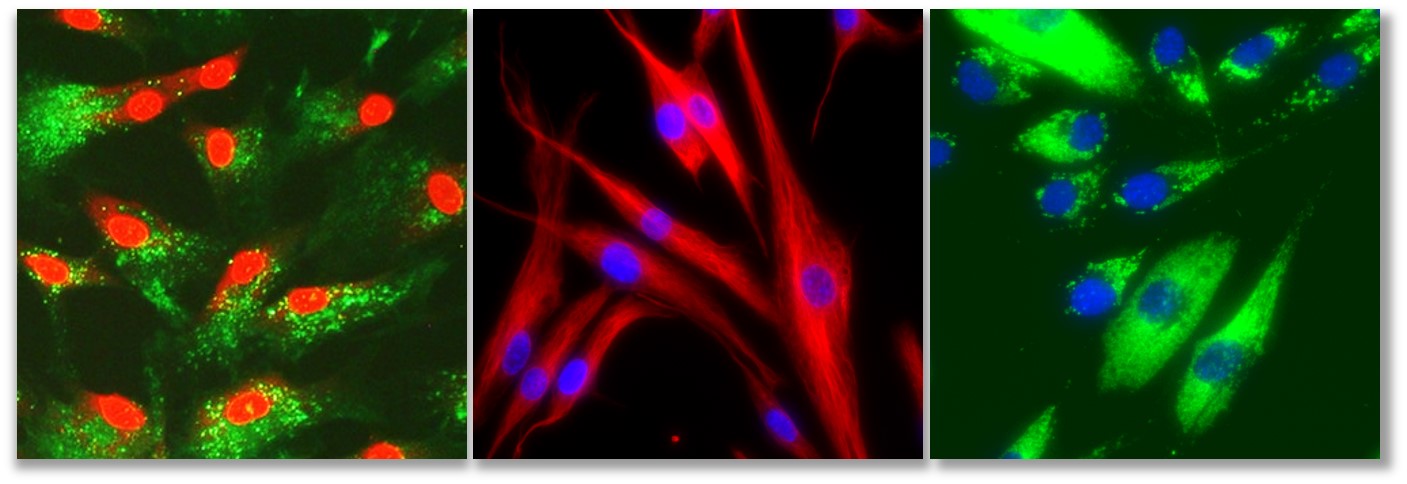
Fibroblasts, the most common mammalian connective tissue cells, form fibrous supporting structures consisting of collagen and other extracellular matrix (ECM) molecules. The flat, elongated cells vary in shape from stellate (young) to fusiform and spindle shaped, with cytoplasmic processes present in connective tissue. With their ability to liberate growth factors, lay down fibroelastic matrices, and proliferate at sites of inflammation, fibroblasts play critical roles in wound healing, tissue repair, and remodeling. As immature cells, fibroblasts can differentiate into other connective tissue cells, such as chondroblasts and osteoblasts.
Notably, along with Human Fibroblast-Like Synoviocytes (HFLS) from Cell Applications, primary Human Dermal Fibroblasts (HDF) from Cell Applications served as a critical human somatic donor cell source in the seminal, landmark research published in Cell and related journals in 2007 by Dr. Shinya Yamanaka and colleagues. His breakthrough discoveries established the foundation of induced pluripotent stem cell (iPSC) technology and earned Dr. Yamanaka the Nobel Prize in Physiology or Medicine in 2012.
